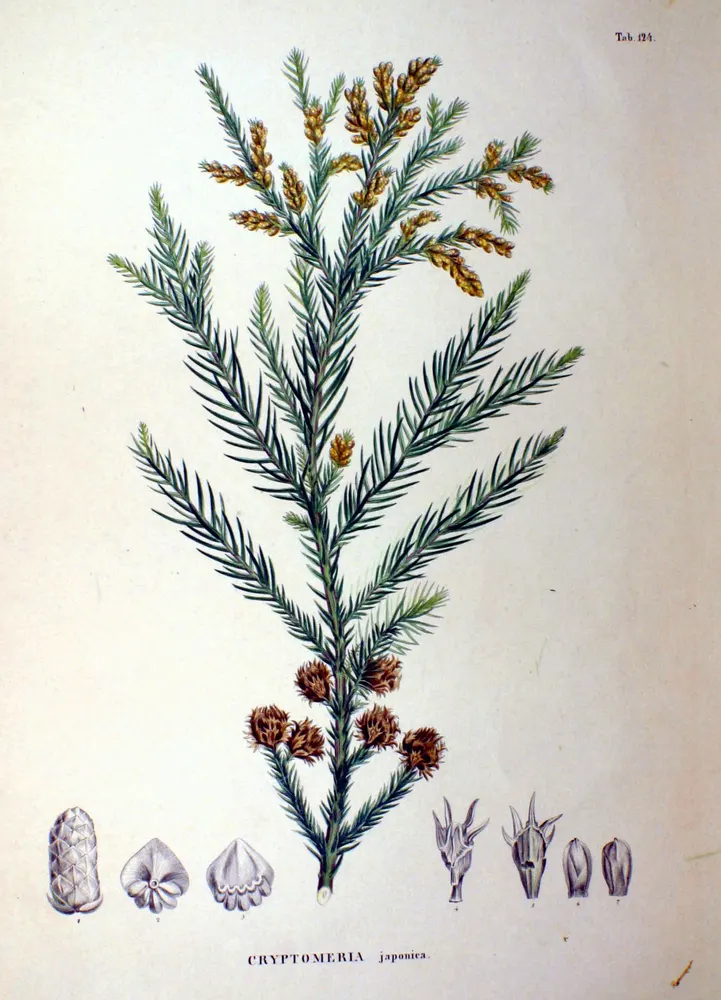
Photo: Philipp Franz von Siebold and Joseph Gerhard Zuccarini, Public domain (via Wikimedia Commons)
Japanese Cedar
Cryptomeria japonica
Also known as Sugi, Japanese Red-Cedar, Temple Cedar
Key benefits
✦Traditional uses
✦For well over a thousand years, sugi has stood at the heart of Japanese life, its towering, arrow-straight trunks felled to raise temples, shrine gates, and the great wooden halls of old capitals like Nara and Kyoto. Entire sacred groves of ancient Cryptomeria were, and still are, planted around Shinto shrines, where the oldest individuals are treated as living deities in their own right. The fragrant wood was long favored for sake casks and soy sauce barrels, its resin lending a faint cedary sweetness to the liquid aged inside, while shavings and bark were burned as incense to scent temples and homes. It has never been a common ingested medicine, but its aromatic wood and foliage have a long folk history of being burned, worn, or kept close for their scent and presumed purifying qualities rather than eaten or brewed.
How to grow & use it
✦The full apothecary for Japanese Cedar
Traditional remedies and step-by-step preparations, a complete growing guide, and how to harvest, dry, and store it, all unlocked with HerbLens Unlimited.
- ✦Remedies & preparations
- ✦ Growing guide
- ✦Harvest & storage
From under $6 a month. Free plant identifications always included.
- ✦Hinoki cypress
- ✦Sandalwood
- ✦Sacred Japanese incense herbs like mugwort
- ✦Western red cedar (for aromatic wood use)
- ✦Hinoki cypress
“For the gardener dreaming of a living temple gate, a single tree that will still be towering when their grandchildren are old.”
The Jomon Sugi, a wild Cryptomeria japonica growing on the island of Yakushima, is estimated by some researchers to be between two and seven thousand years old, making it one of the most ancient living trees in Japan and a pilgrimage site for hikers who trek for hours through mossy forest just to stand beneath it.
Japanese cedar pollen is one of Japan's most significant seasonal allergens, causing widespread allergic rhinitis (kafunsho) each spring, and its sawdust can irritate airways too. The essential oil is for external, diffused use only and should never be taken by mouth.