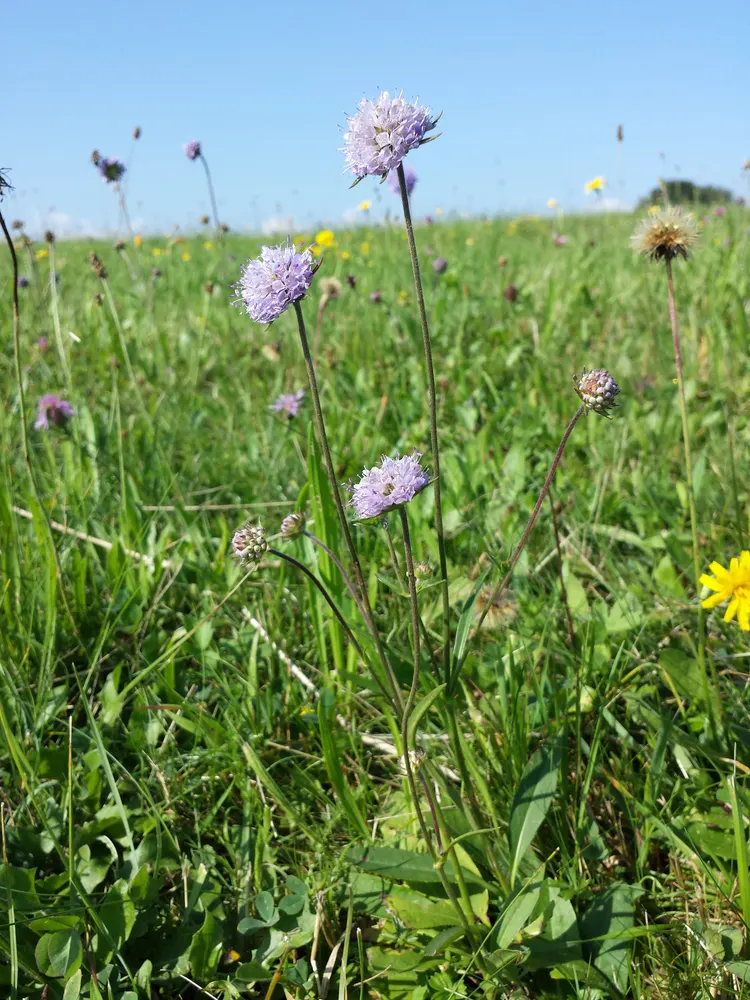
Photo: Stefan.lefnaer, CC BY-SA 4.0 (via Wikimedia Commons)
Devil's-Bit Scabious
Succisa pratensis
Also known as Devil's Bit, Precious Devil's Bit, Blue Buttons, Curl Doddy
Key benefits
✦Traditional uses
✦Devil's-bit scabious earned its common name from centuries of use against scabies and other stubborn skin complaints, when country herbalists turned to its bitter root and leaves for washes and poultices. In old English and European household medicine, it was also steeped as a tea for coughs, sore throats, and lingering fevers, and was counted among the herbs used to help draw out infection from wounds and sores. It never rose to the fame of echinacea or elderflower, but for generations of cottage gardeners and hedgerow healers, it was a dependable, humble standby. Today it is cherished as much for its ecological gifts, feeding bees and butterflies late into the year, as for its herbal legacy.
How to grow & use it
✦The full apothecary for Devil's-Bit Scabious
Traditional remedies and step-by-step preparations, a complete growing guide, and how to harvest, dry, and store it, all unlocked with HerbLens Unlimited.
- ✦Remedies & preparations
- ✦ Growing guide
- ✦Harvest & storage
From under $6 a month. Free plant identifications always included.
- ✦Calendula
- ✦Plantain
- ✦Chamomile
- ✦Teasel root
- ✦Burdock root
“For the last bloom of the meadow season, and skin that could use an old-fashioned, gentle touch.”
The plant's odd, abruptly truncated root gave rise to an old European legend: the devil, envious of how much good the plant did for humankind, was said to have bitten off the end of its root out of pure spite, leaving it forever stubby.
No significant toxicity has been documented for devil's-bit scabious, though it has not been well studied and reliable dosing information is limited.