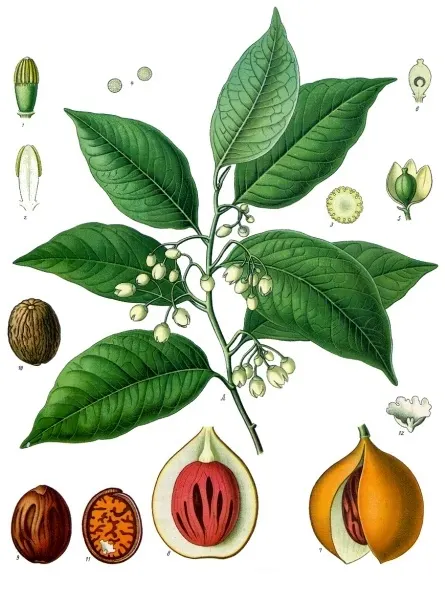
Photo: Franz Eugen Köhler, Köhler's Medizinal-Pflanzen, Public domain (via Wikimedia Commons)
Nutmeg
Myristica fragrans
Also known as Myristica, Jaiphal, Muscade, The Spice Islands' Nut
Key benefits
✦Traditional uses
✦For centuries, nutmeg was worth more than gold, and wars were fought over the tiny volcanic islands where it grew wild. Beyond its place in the spice trade, healers across Asia and later Europe folded a pinch of grated nutmeg into warm milk or broth to settle an uneasy stomach and coax along a restless night's sleep. In traditional Ayurvedic and Chinese medicine, it was valued as a warming spice, one thought to comfort the digestion and ease the mind when used sparingly. Its cousin spice, mace, the lacy red covering around the same seed, traveled the same trade routes and found its way into everything from pickling spice to perfume.
How to grow & use it
✦The full apothecary for Nutmeg
Traditional remedies and step-by-step preparations, a complete growing guide, and how to harvest, dry, and store it, all unlocked with HerbLens Unlimited.
- ✦Remedies & preparations
- ✦ Growing guide
- ✦Harvest & storage
From under $6 a month. Free plant identifications always included.
- ✦Cinnamon
- ✦Clove
- ✦Cardamom
- ✦Mace
- ✦Allspice
“For the hush of a snow-quiet kitchen, a grated whisper of warmth over eggnog, pumpkin pie, or a sleepy cup of milk.”
In 1667, the Dutch traded the tiny nutmeg-growing island of Run to the British in exchange for a far less fragrant patch of land an ocean away: Manhattan.
Nutmeg is safe in the small amounts used in cooking, but just one to three whole nutmegs can cause a toxic reaction with hallucinations, a racing heart, and nausea, and has rarely been linked to death. Keep it away from children, avoid amounts beyond seasoning during pregnancy, and be aware it may interact with sedative or psychiatric medications.