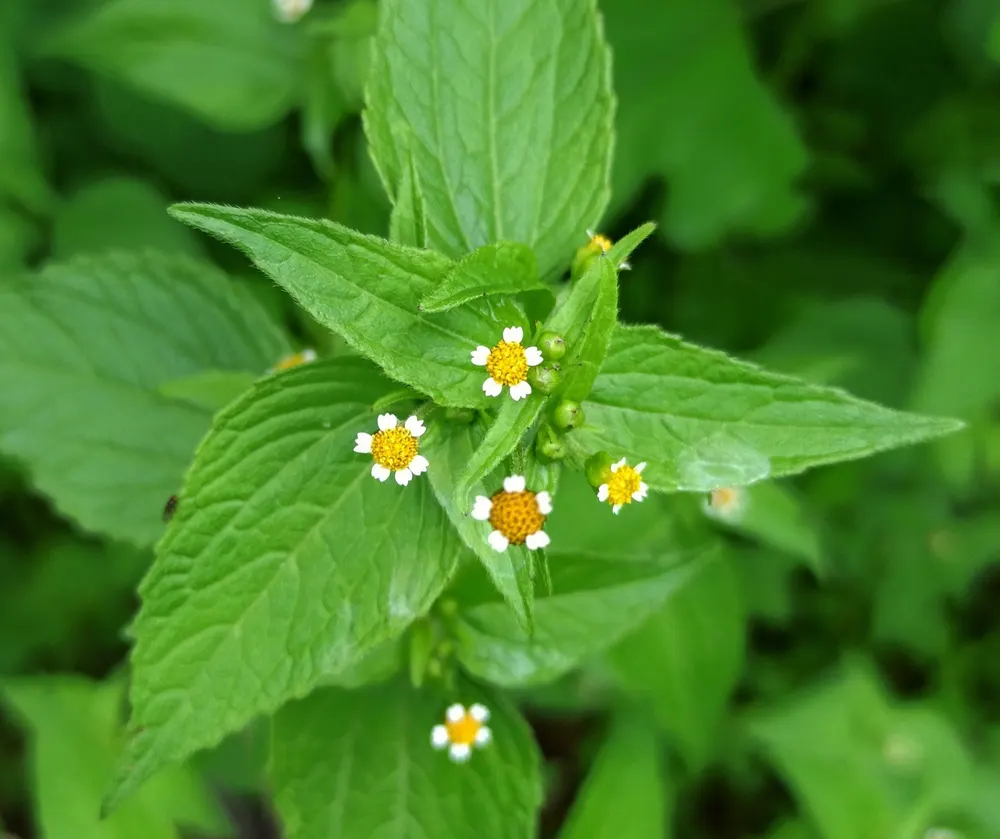
Photo: Juan Carlos Fonseca Mata, CC BY-SA 4.0 (via Wikimedia Commons)
Gallant Soldier (Guascas)
Galinsoga parviflora
Also known as Guascas, Quickweed, Littleflower Galinsoga, Shaggy Soldier's cousin, Potato Weed
Key benefits
✦Traditional uses
✦Long before gardeners learned to curse it, Galinsoga parviflora was quietly feeding people. In the highlands of Bogota, Colombia, it is treasured under the name guascas, the herb that gives the beloved potato and chicken soup ajiaco its distinctive, almost truffled depth. Across parts of Africa and Asia, where the plant traveled as an accidental hitchhiker in ship ballast and nursery soil, it settled into local cooking as a humble potherb, wilted into stews the way one might use spinach or amaranth greens. In folk tradition, the crushed fresh leaf has also been pressed onto small cuts and scrapes to help calm the skin and encourage healing, a simple field remedy passed down by people who found the plant growing right at their feet.
How to grow & use it
✦The full apothecary for Gallant Soldier (Guascas)
Traditional remedies and step-by-step preparations, a complete growing guide, and how to harvest, dry, and store it, all unlocked with HerbLens Unlimited.
- ✦Remedies & preparations
- ✦ Growing guide
- ✦Harvest & storage
From under $6 a month. Free plant identifications always included.
- ✦Cilantro
- ✦Capers
- ✦Epazote
- ✦Cilantro
- ✦Flat-leaf parsley
“For the soup that tastes like a grandmother's kitchen, and the weed that turned out to be dinner all along.”
The genus Galinsoga honors Mariano Martinez de Galinsoga, an 18th century Spanish royal physician and botanist, but in Germany the plant earned a very different nickname, Franzosenkraut, or Frenchman's weed, from a persistent old story that it first spread across Europe after escaping the gardens of Paris.
Galinsoga parviflora is not known to be toxic and is widely eaten as a leafy green in Colombia, parts of Africa, and Asia, but a few sensible cautions still apply. As a member of the Asteraceae (ragweed and daisy) family, it may cause a reaction in people with known sensitivities to that plant family. Always harvest from areas free of pesticides, herbicides, and roadside pollution, and rinse thoroughly, since it commonly grows in disturbed soil that can carry contaminants. Correct identification matters when foraging any wild green, so confirm the plant with a knowledgeable source before eating it. Its traditional wound and digestive uses have not been confirmed by modern clinical research, so pregnant or nursing women, young children, and anyone managing a health condition or taking medication should speak with a qualified healthcare professional before using it beyond ordinary culinary amounts.