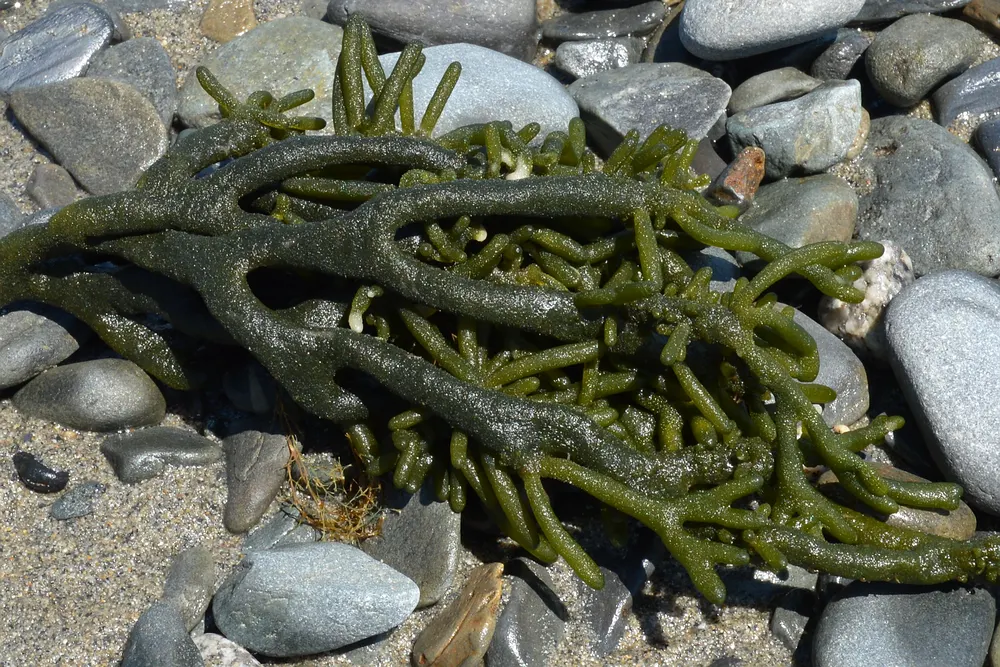
Photo: Ryan Hodnett, CC BY-SA 4.0 (via Wikimedia Commons)
Dead Man's Fingers (also sold as Cheonggak)
Codium fragile
Also known as Dead Man's Fingers, Cheonggak (청각), Green Sea Fingers, Sponge Seaweed, Oyster Thief
Key benefits
✦Traditional uses
✦Long before it had a scientific name, coastal foragers from Korea to New England knew Codium fragile by touch alone, its dark, velvety fronds unmistakable among the slippery kelps and wracks of the tide line. In Korea it is known as cheonggak and has been folded into kimchi for generations, prized for the faint crunch and briny minerality it lends to the fermenting cabbage. Along other shores it was gathered simply as a nourishing sea vegetable in lean months, valued more for sustenance than for any specific remedy. Its story is really the story of people learning to read the tide, harvesting what the sea offered rather than what was cultivated by hand.
How to grow & use it
✦The full apothecary for Dead Man's Fingers (also sold as Cheonggak)
Traditional remedies and step-by-step preparations, a complete growing guide, and how to harvest, dry, and store it, all unlocked with HerbLens Unlimited.
- ✦Remedies & preparations
- ✦ Growing guide
- ✦Harvest & storage
From under $6 a month. Free plant identifications always included.
- ✦Kelp
- ✦Dulse
- ✦Garlic
- ✦Sea lettuce (Ulva)
- ✦Wakame
“When the tide pulls back and leaves dark green fingers clinging to the rocks, still reaching for the sea that just left them behind.”
Codium fragile earned the nickname Oyster Thief because clumps of it can trap gas bubbles as they photosynthesize, growing buoyant enough to float away from the seabed, sometimes carrying the oysters or scallops they were attached to right along with them.
A safe, edible seaweed with no known toxicity, though like other seaweeds it can concentrate iodine, so those with thyroid conditions should eat it in moderation and source it from clean water.