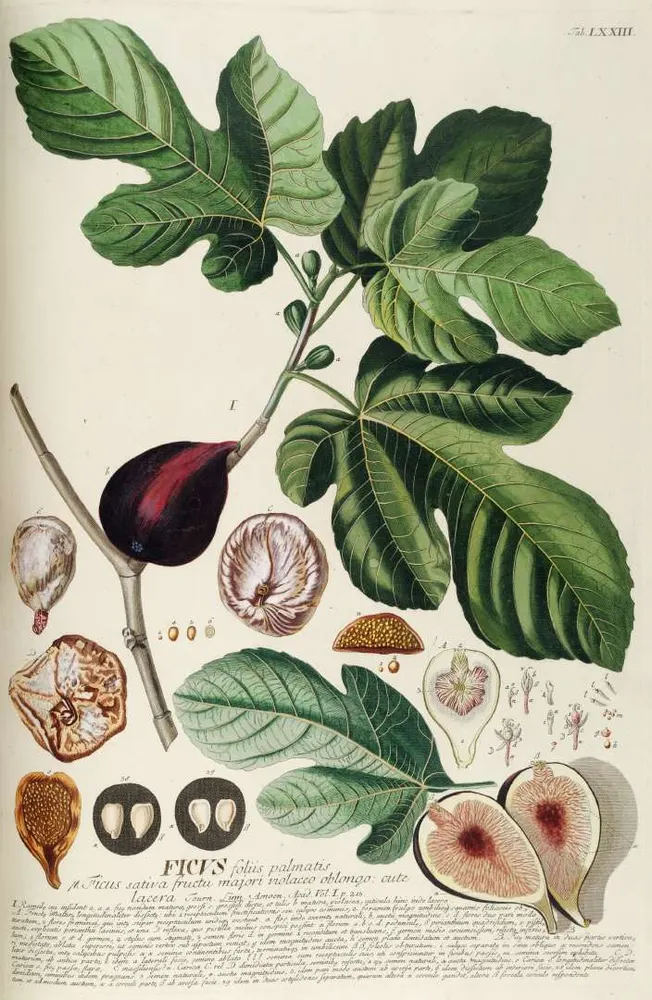
Photo: Trew, C.J, Public domain (via Wikimedia Commons)
Fig
Ficus carica
Also known as Common Fig, Fig Tree, Ficus
Key benefits
✦Traditional uses
✦Few trees are stitched as deeply into human history as the fig. It was among the very first plants ever cultivated, with evidence of fig growing in the Jordan Valley predating even wheat and barley domestication by centuries. Across the Mediterranean, the Middle East, and North Africa, fresh figs were eaten as a seasonal sweetness while dried figs became a staple winter food, strung and stored to carry households through the lean months. Fig leaves have long held a quieter place in traditional Mediterranean and folk herbalism, brewed into a tea that was used to ease digestive discomfort and support overall wellness, while the ripe fruit itself was valued as a gentle food for regularity and nourishment.
How to grow & use it
✦The full apothecary for Fig
Traditional remedies and step-by-step preparations, a complete growing guide, and how to harvest, dry, and store it, all unlocked with HerbLens Unlimited.
- ✦Remedies & preparations
- ✦ Growing guide
- ✦Harvest & storage
From under $6 a month. Free plant identifications always included.
- ✦Cinnamon
- ✦Ginger
- ✦Honey
- ✦Dates
- ✦Raisins
“When you want a sweetness as old as the first gardens, and a quiet remedy passed down from grandmothers who dried their own winter stores.”
A fig is not really a fruit in the usual sense, it is an inverted cluster of tiny flowers blooming inside a fleshy pouch called a syconium. Many fig varieties depend on a specific, near-microscopic wasp to crawl inside and pollinate those hidden flowers, one of the most intimate partnerships in the plant kingdom.
Fresh fig sap can cause a blistering rash if it touches skin that's then exposed to sunlight, so wear gloves when pruning or harvesting and wash it off promptly. Dried figs are high in natural sugars, so those managing blood sugar should keep that in mind.