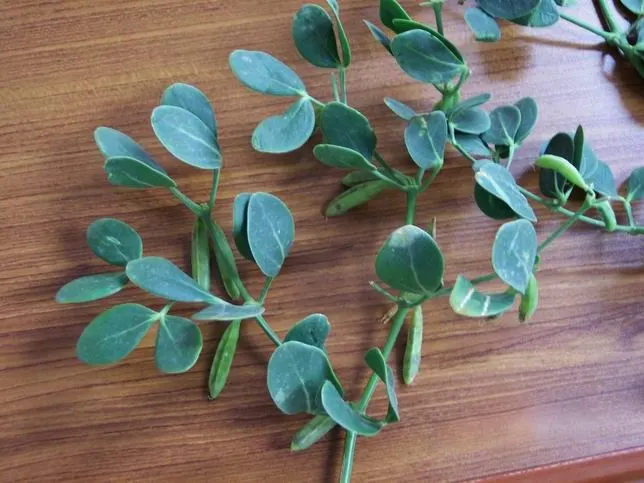
Photo: No machine-readable author provided. Hurior assumed (based on copyright claims)., Public domain (via Wikimedia Commons)
Syrian Bean-Caper
Zygophyllum fabago
Also known as Syrian beancaper, bean-caper, Fabago
Key benefits
✦Traditional uses
✦Across the dry hills of the Mediterranean, the Levant, and Central Asia, Zygophyllum fabago has long done double duty as both pantry staple and folk remedy. Village cooks have pickled its plump flower buds for generations, brining them into a peppery, caper-like condiment when true capers were scarce or too dear, which is exactly how the plant earned its common name. Healers in Iran, Turkey, and parts of China have traditionally turned to its leafy stems for aching joints, skin complaints, and stubborn wounds, steeping the aerial parts as part of everyday household care. Even as it wandered far from home and took root as a roadside weed across the American West, it carried along this quiet reputation as the poor family's caper bush.
How to grow & use it
✦The full apothecary for Syrian Bean-Caper
Traditional remedies and step-by-step preparations, a complete growing guide, and how to harvest, dry, and store it, all unlocked with HerbLens Unlimited.
- ✦Remedies & preparations
- ✦ Growing guide
- ✦Harvest & storage
From under $6 a month. Free plant identifications always included.
- ✦Calendula
- ✦Plantain
- ✦Chamomile
- ✦True capers (Capparis spinosa)
- ✦Pickled nasturtium seed pods
“For a taste of the old Silk Road spice trail, brined in a jar of your own making.”
Its common name comes straight from the kitchen: for generations, cooks along the old caravan routes pickled its unopened flower buds in brine and used them exactly as they would true capers, a clever, budget-friendly substitute that stuck as the plant's namesake.
The leafy parts of Syrian Bean-Caper have a strong purgative effect if eaten in quantity, so use is best limited to the small pickled flower buds used as a caper substitute. It's considered a noxious weed in parts of the western United States, so confirm identification before foraging and check local regulations before planting. It's also not recommended during pregnancy or nursing.