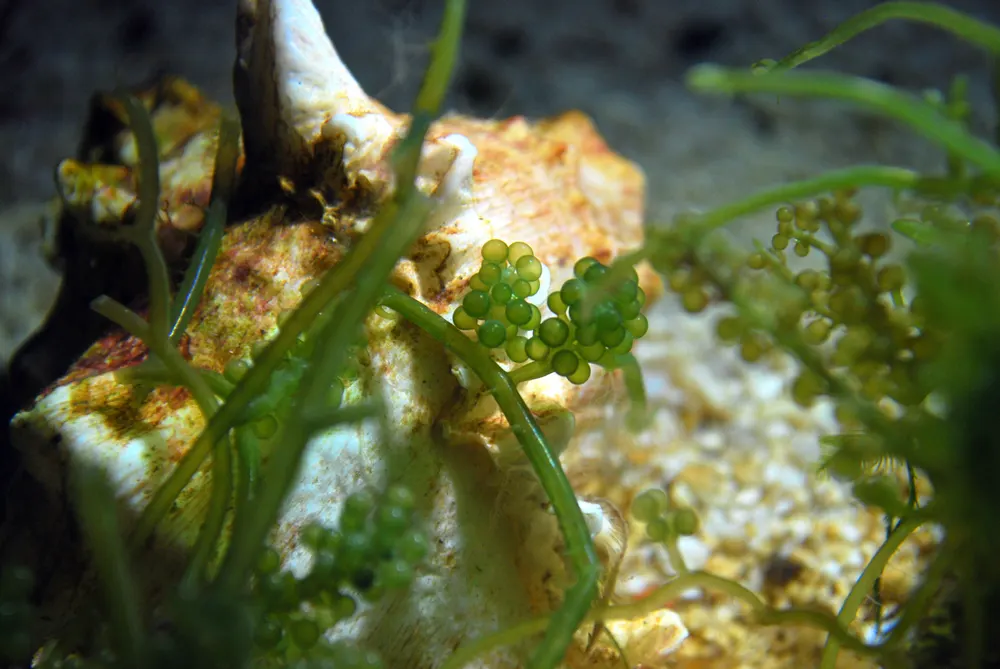
Photo: Harsha K R, CC BY-SA 2.0 (via Wikimedia Commons)
Sea Grapes
Caulerpa lentillifera
Also known as Green Caviar, Umi-budo, Lato, Ar-arusip, Latô
Key benefits
✦Traditional uses
✦Long before it appeared in modern seaweed salads, this bright green alga was gathered by hand along shallow tropical shorelines and eaten fresh as an everyday coastal food. In the Philippines it is known as lato or ar-arusip and is a familiar sight in local markets, while in Okinawa it goes by umi-budo and has been woven into the regional table for generations. Coastal communities have long valued it simply as a refreshing, mineral rich food from the sea, eaten raw with a splash of something sour to brighten its delicate brine.
How to grow & use it
✦The full apothecary for Sea Grapes
Traditional remedies and step-by-step preparations, a complete growing guide, and how to harvest, dry, and store it, all unlocked with HerbLens Unlimited.
- ✦Remedies & preparations
- ✦ Growing guide
- ✦Harvest & storage
From under $6 a month. Free plant identifications always included.
- ✦Fresh tomato
- ✦Calamansi or lime
- ✦Red onion
- ✦Wakame
- ✦Sea lettuce (Ulva)
“When you want the sea itself on a plate, cool, briny, and bursting between your teeth like little bubbles of the tide.”
In Okinawa, where umi-budo has long been part of the local table, sea grapes are often mentioned alongside the island's reputation for unusually long-lived elders, and the little fronds are prized for popping softly against the teeth, which is exactly how they earned the nickname green caviar.
Sea grapes are a food rather than a medicinal herb and are safe to eat. Like other seaweeds they can concentrate iodine and trace heavy metals from the water they grow in, and since they're traditionally eaten raw, rinse them well and eat them promptly.