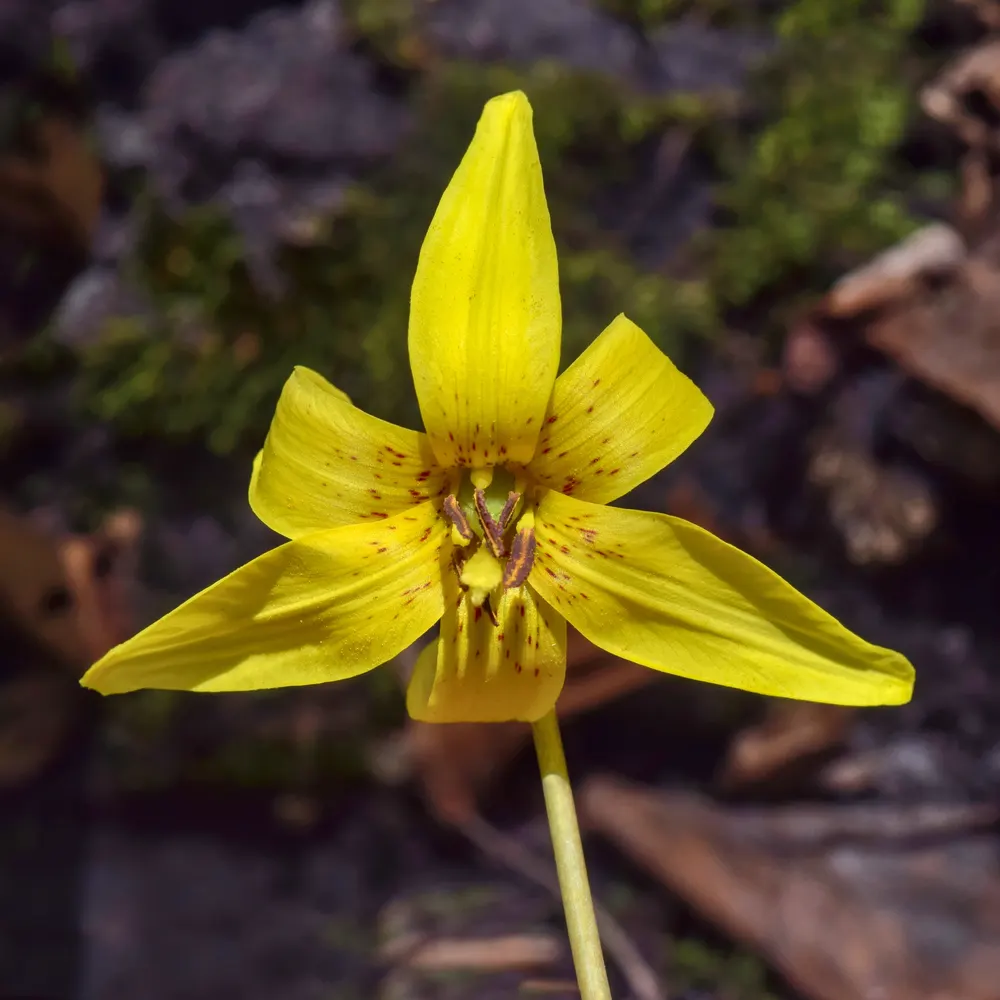
Photo: The Cosmonaut, CC BY-SA 2.5 ca (via Wikimedia Commons)
Trout Lily
Erythronium americanum
Also known as Dogtooth Violet, Adder's Tongue, Yellow Trout Lily, Fawn Lily, Amber Bell
Key benefits
✦Traditional uses
✦Long before it was a garden curiosity, the trout lily was a familiar plant of the spring woods to many Native American nations, including the Iroquois and Cherokee, who gathered its mottled leaves in the earliest days of the thaw. The leaves were traditionally crushed or chewed fresh and applied as a poultice to bruises, swellings, and slow-healing skin ulcers, a simple field remedy pulled straight from the forest floor. The corms, though bitter and best cooked, were dug and eaten by some communities as a starchy addition to the spring diet, a welcome bit of green and gold after a long winter. The plant takes its name from the beautiful brown and green mottling of its leaves, said to echo the markings of a brook trout in the shallows nearby.
How to grow & use it
✦The full apothecary for Trout Lily
Traditional remedies and step-by-step preparations, a complete growing guide, and how to harvest, dry, and store it, all unlocked with HerbLens Unlimited.
- ✦Remedies & preparations
- ✦ Growing guide
- ✦Harvest & storage
From under $6 a month. Free plant identifications always included.
- ✦Plantain
- ✦Comfrey
- ✦Calendula
- ✦Plantain leaf
- ✦Comfrey leaf
“For a quiet reminder that the forest keeps its own calendar, unfurling gold before the trees ever leaf out.”
A trout lily colony can spread quietly under the forest canopy for decades, yet most of the plants you see are single-leaved and will never flower. It takes a corm four to seven years of patient underground growth before it sends up the second leaf that allows it to finally bloom.
Trout lily's fresh corms and leaves have a history as an emetic, so eating them raw or in quantity can cause nausea and vomiting. Traditional use also affected fertility, so it should be avoided during pregnancy or while trying to conceive.