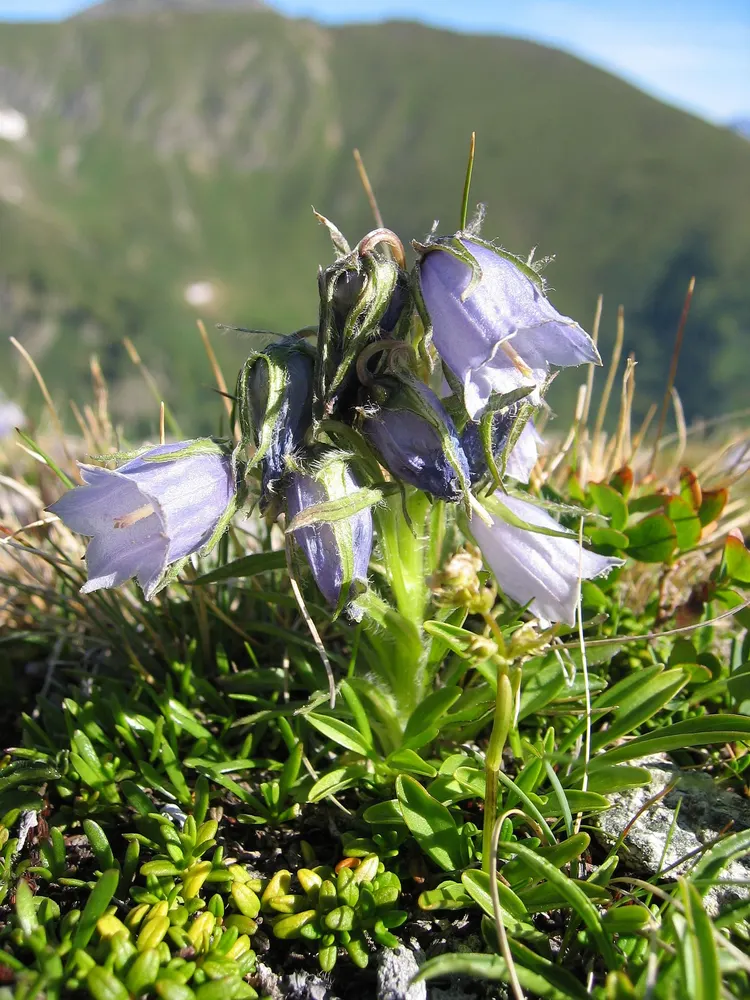
Photo: CC BY-SA 3.0 (via Wikimedia Commons)
Alpine Bellflower
Campanula alpina
Also known as Alp Bellflower
Key benefits
✦Traditional uses
✦Campanula alpina has never carried a real herbal or culinary tradition the way many lowland plants have. Its story is instead a horticultural one: as alpine gardening caught on across Europe in the 1800s, plant hunters and rock garden enthusiasts prized this small, sturdy bellflower for its ability to thrive where little else would take root, tucking it into scree gardens and stone troughs to recreate a slice of the high mountains at home. In the broader language of flowers popular in Victorian Europe, bellflowers as a family were given as tokens of gratitude and steadfast affection, a meaning that has followed the genus into modern garden lore. Today it remains valued chiefly as a hardy, honest little wildflower rather than as a remedy.
How to grow & use it
✦The full apothecary for Alpine Bellflower
Traditional remedies and step-by-step preparations, a complete growing guide, and how to harvest, dry, and store it, all unlocked with HerbLens Unlimited.
- ✦Remedies & preparations
- ✦ Growing guide
- ✦Harvest & storage
From under $6 a month. Free plant identifications always included.
“Choose Alpine Bellflower when you want to coax a little of the high mountains into a sunny, well-drained corner of your own garden.”
The genus name Campanula comes from the Latin campana, meaning little bell, a fitting nod to the nodding, bell-shaped flowers this alpine species carries all summer long.
Alpine bellflower has no documented toxicity, though it isn't an established food or medicinal herb. It often grows in fragile alpine habitat, so it's best admired in place or grown from nursery stock rather than dug up.