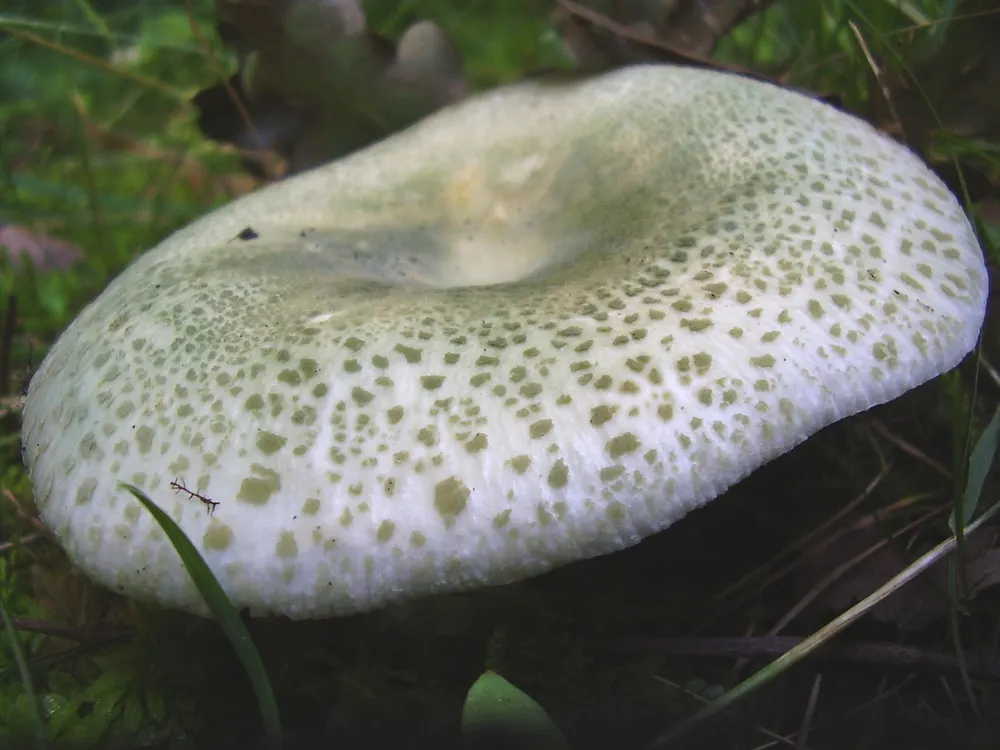
Photo: Paffka, CC BY-SA 3.0 (via Wikimedia Commons)
Green-cracking Russula
Russula virescens
Also known as Quilted Green Russula, Green Brittlegill, Golden-cap Russula
Key benefits
✦Traditional uses
✦Long before it had a Latin name, this mushroom was quietly gathered from the shade of old oaks and beeches across Europe and Asia, its cracked jade cap a welcome sight to anyone who knew where to look. It has a long-standing reputation as one of the best tasting members of a genus mostly known for its bitterness, prized in French country kitchens and treasured in the markets of Yunnan, China, where wild russulas are sold by the basketful in late summer. Because it rarely harbors the acrid, peppery bite common to its relatives, foragers came to trust it as a reliable, gentle introduction to eating wild fungi. Its story is one of patient woodland foraging passed down through generations rather than laboratory study.
How to grow & use it
✦The full apothecary for Green-cracking Russula
Traditional remedies and step-by-step preparations, a complete growing guide, and how to harvest, dry, and store it, all unlocked with HerbLens Unlimited.
- ✦Remedies & preparations
- ✦ Growing guide
- ✦Harvest & storage
From under $6 a month. Free plant identifications always included.
- ✦Garlic
- ✦Thyme
- ✦Fresh parsley
- ✦Chanterelle
- ✦Cremini mushroom
“For the taste of a summer forest floor, mild, nutty, and firm, seek the moss green mosaic cap tucked at the foot of an old oak.”
Its cap surface cracks into a soft mosaic of dusty green and white patches as it matures, almost like old paint or a tortoise shell, which is how it earned both its French name russule verdoyante and its English nickname of quilted green russula.
Russula virescens is a well-regarded wild edible when correctly identified, but green-capped mushrooms can be confused by beginners with the deadly death cap and its relatives. Never eat a wild mushroom, including this one, unless it's been positively identified in hand by an experienced forager, and always cook it thoroughly.