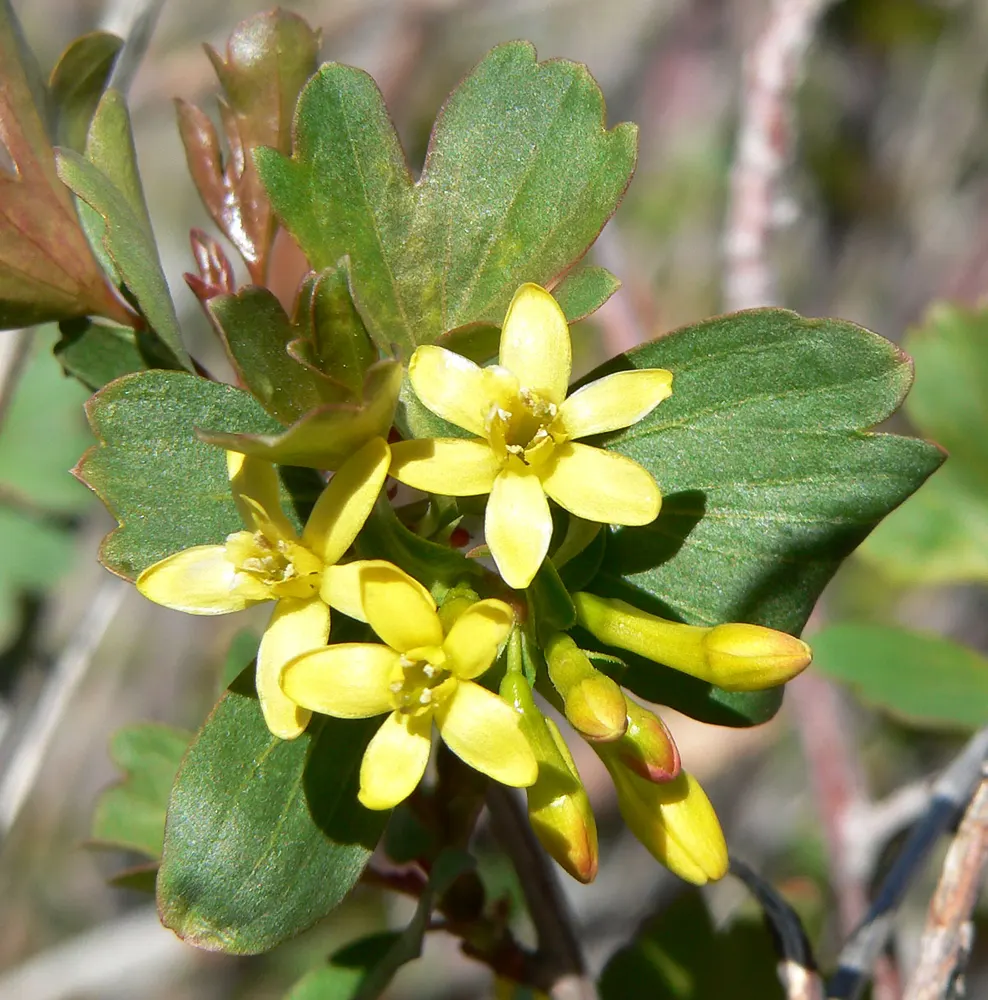
Photo: Stan Shebs, CC BY-SA 3.0 (via Wikimedia Commons)
Clove Currant
Ribes odoratum
Also known as Buffalo Currant, Golden Currant, Missouri Currant, Clove Bush
Key benefits
✦Traditional uses
✦Long before it graced ornamental gardens, clove currant fed people. Plains tribes including the Lakota and Cheyenne gathered the deep purple berries in late summer, eating them fresh, drying them for winter stores, and pounding them into pemmican alongside dried meat and fat. Early travelers on the Missouri River, including members of the Lewis and Clark expedition, took note of the shrub's unmistakable clove-scented blossoms and the sweet-tart fruit that followed. Settlers later carried it into home orchards and hedgerows, prizing it as both a food plant and a fragrant, easy-care ornamental.
How to grow & use it
✦The full apothecary for Clove Currant
Traditional remedies and step-by-step preparations, a complete growing guide, and how to harvest, dry, and store it, all unlocked with HerbLens Unlimited.
- ✦Remedies & preparations
- ✦ Growing guide
- ✦Harvest & storage
From under $6 a month. Free plant identifications always included.
- ✦Hibiscus
- ✦Rosehip
- ✦Mint
- ✦Black currant (Ribes nigrum)
- ✦Elderberry
“When golden blossoms perfume the spring air with clove and vanilla, promising dark, sweet currants to come.”
The flowers of Ribes odoratum smell distinctly of clove and vanilla, a fragrance so noticeable that Meriwether Lewis wrote about the shrub in his 1806 journals along the Missouri River, calling it out among the country's most pleasant-smelling blooms.
The berries are a safe, traditional food eaten fresh, dried, or cooked into jams; unripe berries are tart and better cooked than eaten raw.