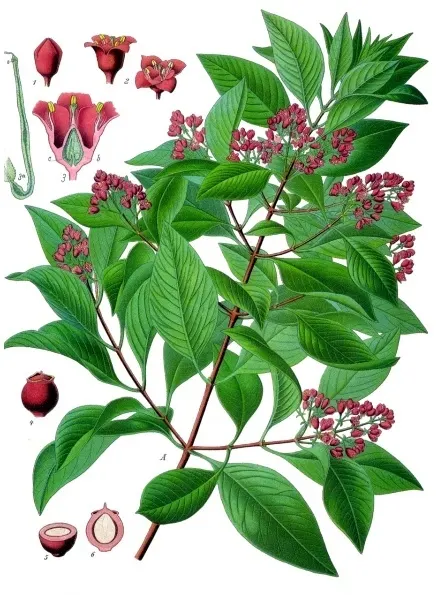
Photo: Franz Eugen Köhler, Köhler's Medizinal-Pflanzen, Public domain (via Wikimedia Commons)
Sandalwood
Santalum album
Also known as Indian Sandalwood, Chandan, White Sandalwood, East Indian Sandalwood
Key benefits
✦Traditional uses
✦For thousands of years, sandalwood's fragrant golden heartwood has perfumed temples, anointed foreheads, and scented the smoke of ceremonies across India, China, and Southeast Asia. In Ayurvedic medicine it is known as chandan, a cooling substance traditionally used to calm heated, irritated skin, soothe the mind, and settle a restless stomach. Buddhist and Hindu traditions alike have long carved its wood into prayer beads and temple statues, believing its scent to be both purifying and sacred. Because true heartwood takes decades to develop its prized aroma, sandalwood has always carried an air of patience and preciousness.
How to grow & use it
✦The full apothecary for Sandalwood
Traditional remedies and step-by-step preparations, a complete growing guide, and how to harvest, dry, and store it, all unlocked with HerbLens Unlimited.
- ✦Remedies & preparations
- ✦ Growing guide
- ✦Harvest & storage
From under $6 a month. Free plant identifications always included.
- ✦Rose
- ✦Vetiver
- ✦Ashwagandha
- ✦Cedarwood
- ✦Vetiver
“When the day feels too loud and the skin and mind both ask to be cooled.”
Indian sandalwood is one of the most valuable woods on earth, and for centuries the Indian government owned every wild tree outright, regardless of whose land it grew on, to protect it from over-harvesting.
Sandalwood is gentle in small topical or dietary amounts, but its concentrated essential oil should never be swallowed, since ingesting it undiluted can cause nausea, dizziness, and more serious toxicity. Patch test before topical use, as it can irritate sensitive skin, and avoid internal use during pregnancy, breastfeeding, or with kidney conditions.