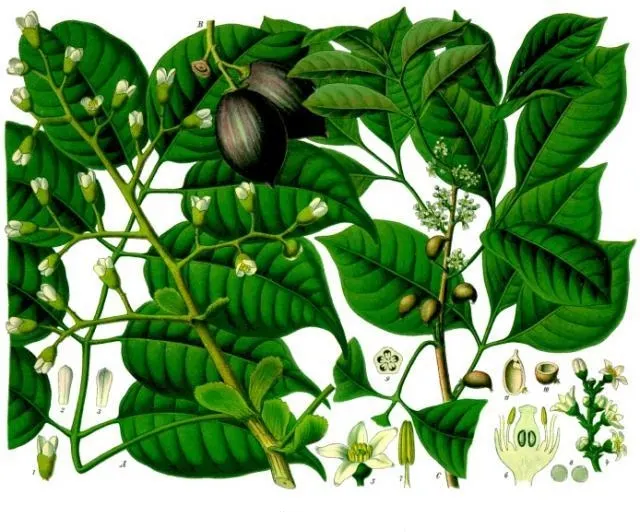
Photo: Franz Eugen Köhler, Köhler's Medizinal-Pflanzen, Public domain (via Wikimedia Commons)
Elemi (Manila Elemi)
Canarium luzonicum
Also known as Manila Elemi, Pili Elemi, Elemi Gum, Brea Blanca
Key benefits
✦Traditional uses
✦For generations, Filipino healers and gatherers have tapped the bark of the elemi tree the way one might tap a maple, collecting the pale, fragrant resin that weeps out and slowly hardens into soft golden tears. That resin found its way into old-world wound ointments long before modern dressings existed, prized for keeping cuts and sores clean and covered while they healed. Sailors and shipwrights valued it too, working it into pitch and salves for cracked, weathered hands. Steam rising from warmed elemi resin, sharp with pine and lemon, has traditionally been used to ease stuffy chests and clear the head during colds, a cousin in spirit to frankincense and myrrh from the same resinous family.
How to grow & use it
✦The full apothecary for Elemi (Manila Elemi)
Traditional remedies and step-by-step preparations, a complete growing guide, and how to harvest, dry, and store it, all unlocked with HerbLens Unlimited.
- ✦Remedies & preparations
- ✦ Growing guide
- ✦Harvest & storage
From under $6 a month. Free plant identifications always included.
- ✦Frankincense
- ✦Myrrh
- ✦Lavender
- ✦Frankincense
- ✦Copaiba balsam
“When you want the bright, citrus-pine warmth of the old resin cabinet, the healer's salve carried by sailors and herbalists alike.”
Some old apothecary texts trace the name elemi to an Arabic phrase loosely meaning 'as above, so below,' a nod to the resin's old reputation for treating both surface wounds and the ailments believed to trouble the body within.
Elemi essential oil is for topical or aromatic use only and should never be taken internally. Dilute it in a carrier oil and patch test first, since it can irritate or sensitize skin.