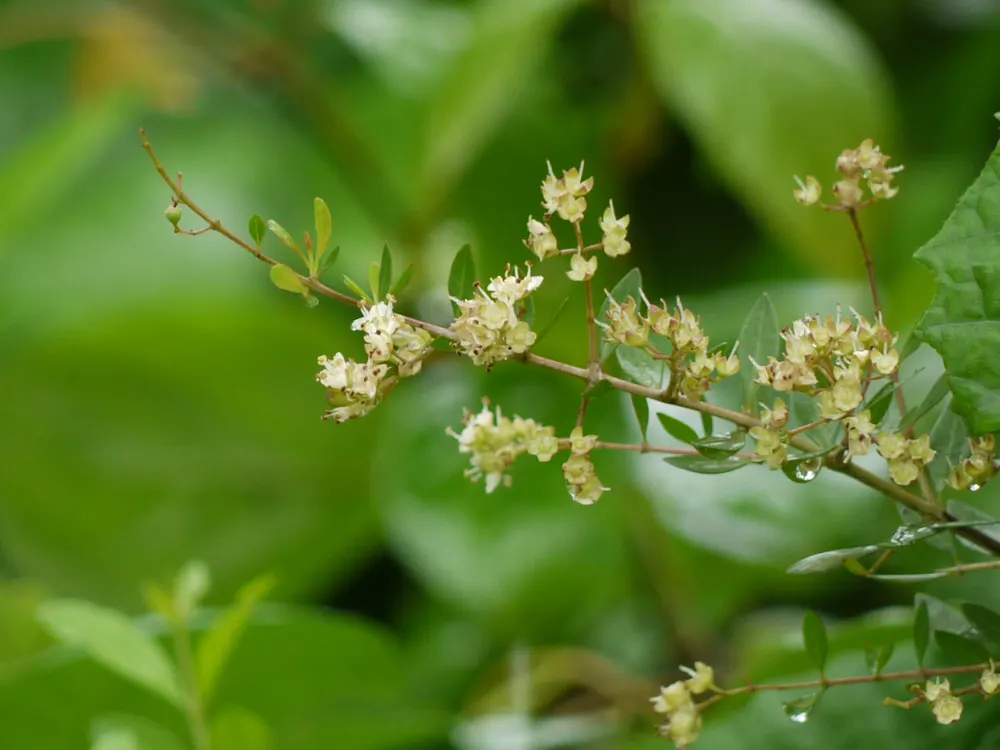
Photo: Dinesh Valke from Thane, India, CC BY-SA 2.0 (via Wikimedia Commons)
Henna
Lawsonia inermis
Also known as Mehndi, Egyptian privet, Mignonette tree, Al-Khanna
Key benefits
✦Traditional uses
✦Henna has been prized for thousands of years across North Africa, the Middle East, and South Asia, where its crushed leaves release a reddish-orange dye called lawsone. Egyptian mummies, including that of Ramesses II, were found with henna-stained hair and nails, and brides across many cultures have had their hands and feet adorned with henna paste for luck and celebration. Beyond decoration, the leaves and their cooling paste were traditionally applied to the scalp, palms, and soles in hot climates, valued as much for their soothing feel as for their color. It remains one of the oldest continuously used body art and hair care traditions in the world.
How to grow & use it
✦The full apothecary for Henna
Traditional remedies and step-by-step preparations, a complete growing guide, and how to harvest, dry, and store it, all unlocked with HerbLens Unlimited.
- ✦Remedies & preparations
- ✦ Growing guide
- ✦Harvest & storage
From under $6 a month. Free plant identifications always included.
- ✦Indigo
- ✦Amla (Indian gooseberry)
- ✦Cassia obovata
- ✦Cassia obovata (neutral henna, for conditioning without red tint)
- ✦Indigo (for deepening color toward black or brown)
“When you want a stain born of sun and leaf, not a bottle off a shelf.”
Henna-stained hair and nails have been found on Egyptian mummies more than 3,000 years old, including the pharaoh Ramesses II, making it one of the oldest cosmetic traditions still practiced today.
Pure henna applied to skin or hair is generally safe, but people with G6PD deficiency, including infants, can have serious reactions and should avoid it. Avoid 'black henna,' which is often adulterated with PPD and can cause severe allergic reactions and scarring; henna is not meant to be taken internally.