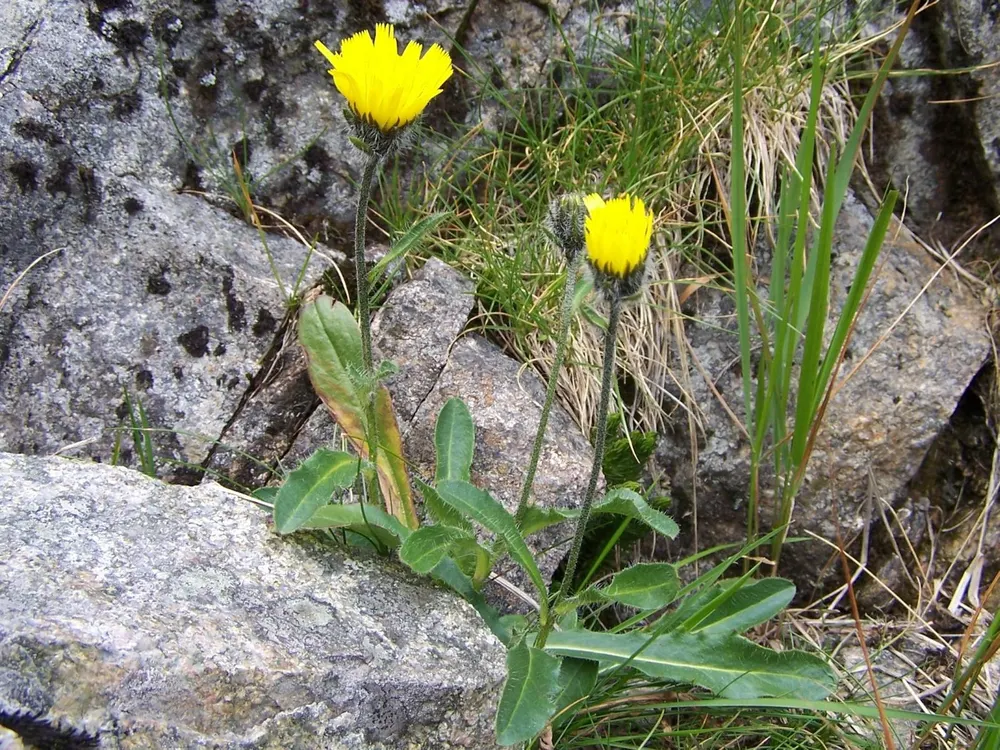
Photo: Jerzy Opioła, CC BY-SA 3.0 (via Wikimedia Commons)
Alpine Hawkweed
Hieracium alpinum
Also known as Golden Hawkweed, Alpine Golden Hawkweed
Key benefits
✦Traditional uses
✦Alpine hawkweed belongs to a genus so tangled with lookalike microspecies that even careful old herbalists tended to pass it by in favor of its lowland cousin, mouse-ear hawkweed, which carried the real weight of hawkweed folk medicine for coughs and water retention. What survives about Hieracium alpinum itself is mostly botanical rather than medicinal, the record of a small, tough, single-flowered daisy that mountain travelers and alpine plant collectors noted for its ability to root into bare scree where almost nothing else would grow. Its true legacy lives in gardens and herbaria more than in the medicine chest. Because solid historical evidence for its internal or topical use is thin, this entry leans on what can be said with confidence rather than borrowing claims that belong to its better-documented relatives.
How to grow & use it
✦The full apothecary for Alpine Hawkweed
Traditional remedies and step-by-step preparations, a complete growing guide, and how to harvest, dry, and store it, all unlocked with HerbLens Unlimited.
- ✦Remedies & preparations
- ✦ Growing guide
- ✦Harvest & storage
From under $6 a month. Free plant identifications always included.
- ✦Alpine gentian
- ✦Moss campion
- ✦Saxifrage
- ✦Mouse-ear hawkweed (Pilosella officinarum), its lowland relative actually used in traditional herbalism
- ✦Dandelion, another bitter Asteraceae herb with a genuine folk-medicine record
“For the thin, bright air above the treeline, where the ground is mostly stone and almost nothing else dares to flower.”
The genus name Hieracium comes from the Greek hierax, meaning hawk. Pliny the Elder wrote that hawks tore the leaves open and rubbed the juice into their eyes to sharpen their vision, which is how the whole hawkweed tribe got its name, alpine hawkweed included, even though it grows far above where any hawk would bother to hunt for it.
Alpine hawkweed has no documented toxicity and no significant history of medicinal or culinary use.