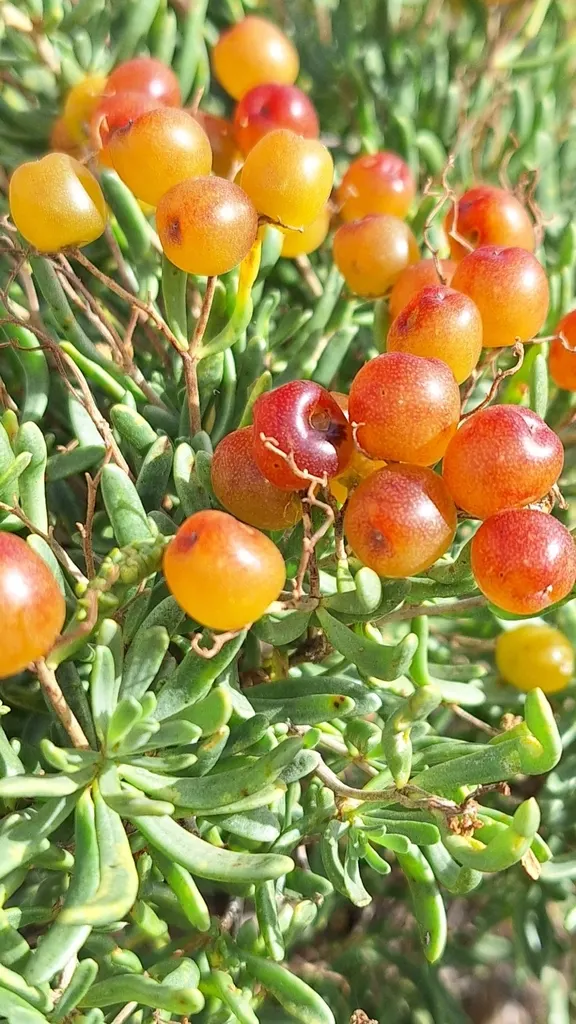
Photo: no rights reserved, CC0 (via iNaturalist)
Nitre Bush
Nitraria billardieri
Also known as Nitre Bush, Dillon Bush, Australian Nitre Bush, Nitraria
Key benefits
✦Traditional uses
✦Long before it had a Latin name, nitre bush was a familiar sight to Aboriginal peoples of arid and inland Australia, who gathered its small ripe berries as a reliable sweet treat in country where little else fruited. The berries were eaten straight from the spiny branches, and in some regions the surplus was pressed and dried into cakes that could be carried and eaten later, stretching a scarce harvest through leaner months. Because the shrub thrives on salt lakes and claypans where few other plants survive, it became a dependable, if humble, marker of food and water nearby for travelers crossing the inland.
How to grow & use it
✦The full apothecary for Nitre Bush
Traditional remedies and step-by-step preparations, a complete growing guide, and how to harvest, dry, and store it, all unlocked with HerbLens Unlimited.
- ✦Remedies & preparations
- ✦ Growing guide
- ✦Harvest & storage
From under $6 a month. Free plant identifications always included.
- ✦Saltbush
- ✦Samphire
- ✦Bluebush
- ✦Quandong
- ✦Muntries
“For the driest, saltiest corner of the garden where nothing else will take hold.”
The name nitre bush comes from the salty, nitre-rich lakebeds and claypans the plant favors, ground so mineral-laden that almost nothing else will take root there, yet this thorny shrub turns it into a fruiting home.
Ripe nitre bush fruit is safe to eat, but the plant is heavily spined, so harvest it carefully to avoid scratches or punctures.