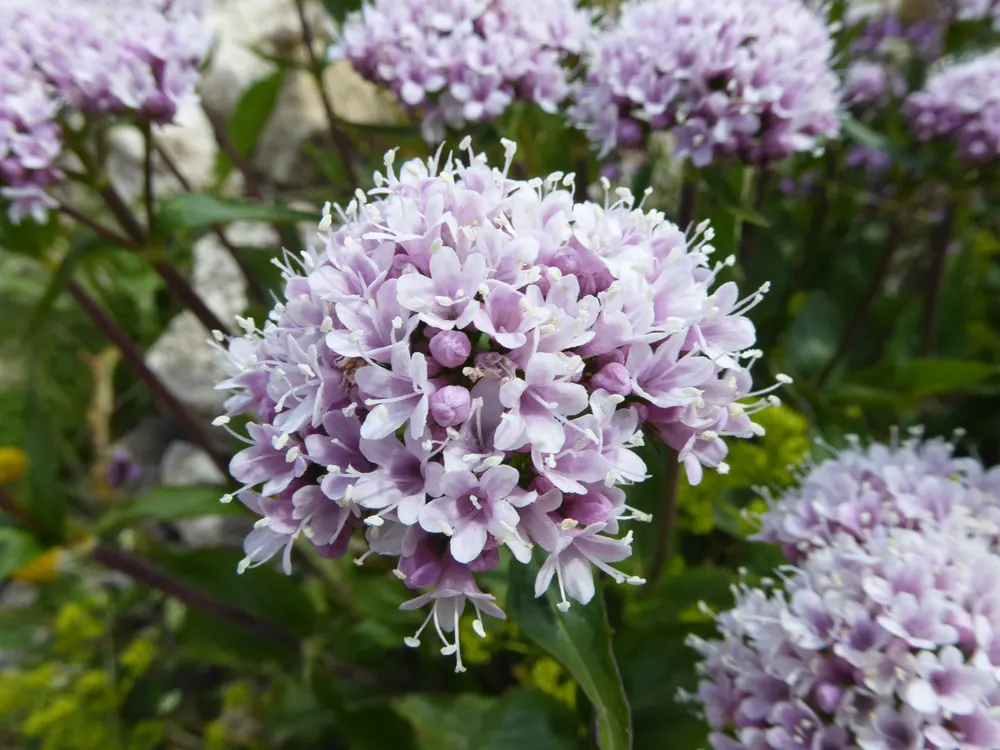
Photo: Syrio, CC BY-SA 4.0 (via Wikimedia Commons)
Mountain Valerian
Valeriana montana
Also known as Mountain Valerian, Alpine Valerian
Key benefits
✦Traditional uses
✦High in the rocky meadows of the Alps and Pyrenees grows a smaller, hardier cousin of the valerian long known in European herbal tradition. Mountain villagers and herb women gathered its pungent root alongside garden valerian, treating the two as close kin with the same quiet gift. Once dried, the root gives off a famously strong, earthy smell, and for generations that smell has meant one thing in cottage kitchens across the mountains: an evening cup meant to loosen the grip of a restless day. It carries the same long, humble history as its lowland relative, valued not for excitement but for the opposite, a return to stillness after too much noise.
How to grow & use it
✦The full apothecary for Mountain Valerian
Traditional remedies and step-by-step preparations, a complete growing guide, and how to harvest, dry, and store it, all unlocked with HerbLens Unlimited.
- ✦Remedies & preparations
- ✦ Growing guide
- ✦Harvest & storage
From under $6 a month. Free plant identifications always included.
- ✦Chamomile
- ✦Lemon Balm
- ✦Hops
- ✦Garden valerian (Valeriana officinalis)
- ✦Passionflower
“For the evening your thoughts are still climbing long after the day is done.”
Cats are famously drawn to the scent of valerian root, often reacting to it much like they do to catnip, and mountain valerian shares the very compounds responsible. European folklore even credited the herb with the Pied Piper's power to lure rats out of Hamelin, root and all.
Mountain valerian can cause drowsiness, so avoid alcohol, sedatives, or other central nervous system depressants alongside it, and don't drive after taking it. It's best stopped a couple of weeks before surgery, since it may interact with anesthesia.