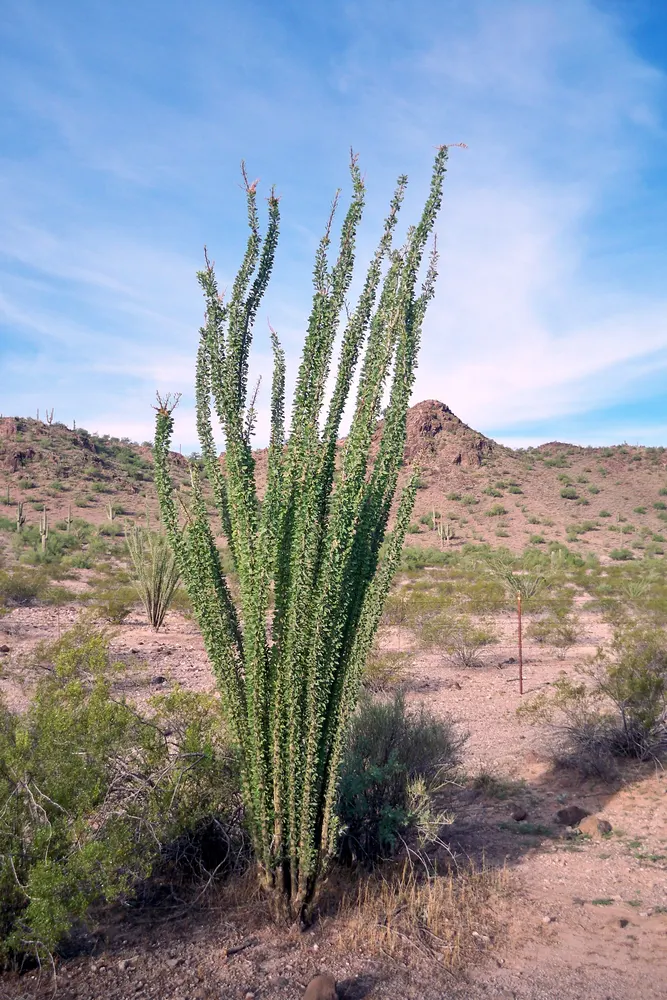
Photo: Ricraider at English Wikipedia, Public domain (via Wikimedia Commons)
Ocotillo
Fouquieria splendens
Also known as Coachwhip, Candlewood, Vine Cactus, Jacob's Staff, Slimwood
Key benefits
✦Traditional uses
✦Ocotillo has long been valued by desert peoples of the Sonoran and Chihuahuan borderlands, including the Seri, Tohono O'odham, and other Southwestern communities, who found many uses for a plant that seems to thrive on almost nothing. The bark was traditionally simmered into a wash or tincture-like preparation applied to sore, tired limbs and used as a gentle skin rinse, while the bright red flowers were steeped as a refreshing, faintly tart drink during the brief spring bloom. Curanderos and traditional healers along the border have also used ocotillo bark preparations to support circulation and ease congestion in the legs and pelvis. Because it leafs out almost overnight after rain and drops its leaves again in drought, it has also long been regarded by desert dwellers as a living signal of the seasons.
How to grow & use it
✦The full apothecary for Ocotillo
Traditional remedies and step-by-step preparations, a complete growing guide, and how to harvest, dry, and store it, all unlocked with HerbLens Unlimited.
- ✦Remedies & preparations
- ✦ Growing guide
- ✦Harvest & storage
From under $6 a month. Free plant identifications always included.
- ✦Hibiscus
- ✦Prickly pear flower
- ✦Yerba mansa
- ✦Hawthorn
- ✦Manzanita
“For the plant that turns bare desert wood into fire-red bloom overnight, ocotillo is nature's own signal that the rains have come.”
Ocotillo is not a cactus at all. It belongs to its own small family, Fouquieriaceae, and its spindly canes can stay bare and gray for months before flushing green with tiny leaves within days of a single desert rain.
Ocotillo isn't known to be significantly toxic, but its bark and flower preparations haven't been well studied and aren't recommended during pregnancy or breastfeeding. It also grows very slowly, so harvest sparingly and respectfully.