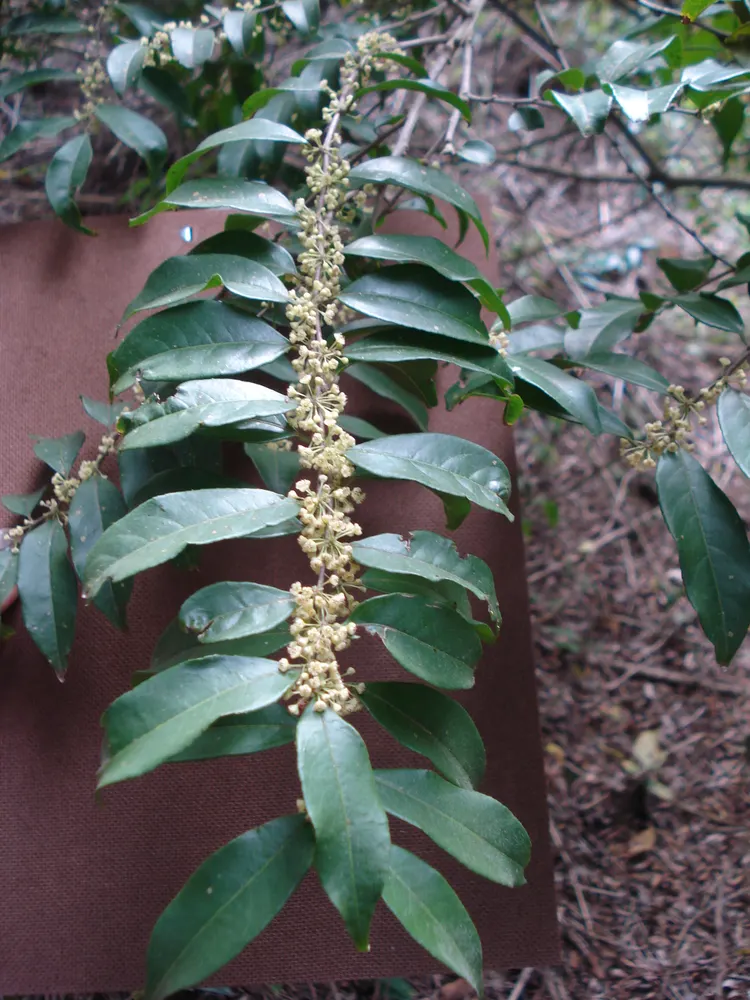
Photo: Diogo Cabral de Oliveira, Public domain (via Wikimedia Commons)
Guaçatonga
Casearia sylvestris
Also known as Guaçatonga, Café-do-mato, Chá-de-bugre, Erva-de-lagarto, Wild coffee bush
Key benefits
✦Traditional uses
✦Long before it drew the attention of pharmacologists, guaçatonga was already a fixture of daily plant medicine across Brazil's forests and backlands. Rural and Indigenous communities, including Tupi-Guarani peoples, crushed or chewed the fresh leaves into a green paste and pressed it directly onto wounds, insect bites, and skin ulcers, trusting it to calm irritation and help the skin along. A tea brewed from the dried leaf became a common household remedy for an upset stomach or a nagging digestive complaint, passed down the way a grandmother's recipe is passed down, by memory rather than measurement. Its folk reputation as a snakebite treatment traveled just as widely, though this was always meant as first aid on the way to real help, never a replacement for it.
How to grow & use it
✦The full apothecary for Guaçatonga
Traditional remedies and step-by-step preparations, a complete growing guide, and how to harvest, dry, and store it, all unlocked with HerbLens Unlimited.
- ✦Remedies & preparations
- ✦ Growing guide
- ✦Harvest & storage
From under $6 a month. Free plant identifications always included.
- ✦Calendula
- ✦Plantain leaf
- ✦Chamomile
- ✦Calendula
- ✦Comfrey leaf
“For old forest wisdom in a leaf, steeped slow and used with care.”
The genus Casearia honors Johannes Casearius, a seventeenth century Dutch clergyman who helped the botanist Paul Hermann collect and catalog plants in Ceylon, so a name first written down on the other side of the world came to label a humble forest shrub across the Atlantic in Brazil.
Guaçatonga's leaves contain potent cytotoxic compounds (casearins) that haven't been well studied for internal human use, so it shouldn't be used casually or in concentrated form, and it should be avoided in pregnancy and breastfeeding. Rural tradition sometimes applies the crushed leaf to snakebite, but this is not a substitute for emergency antivenom and medical care.