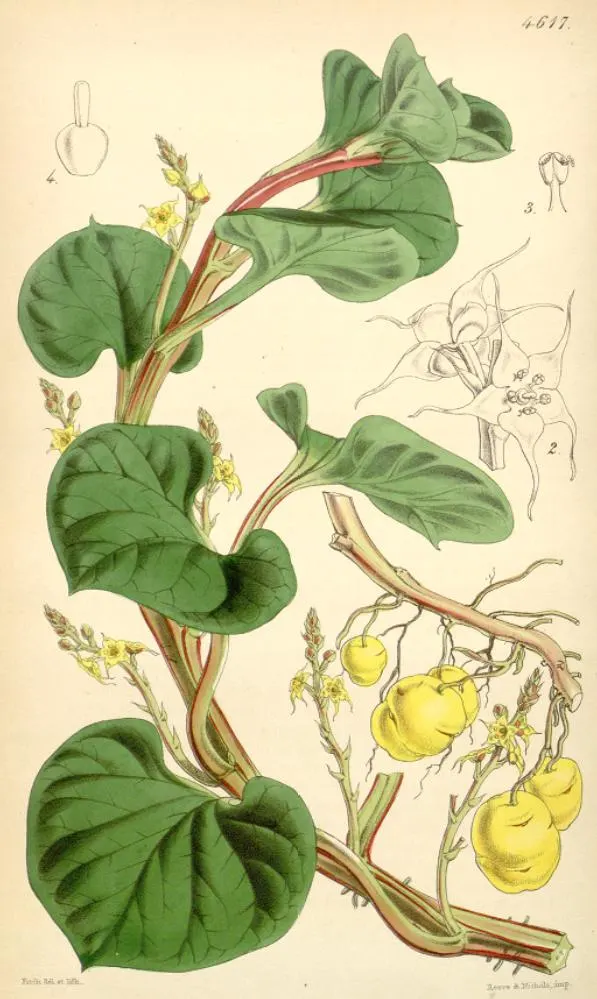
Photo: Sir William Jackson Hooker (1785 - 1865), Public domain (via Wikimedia Commons)
Ulluco
Ullucus tuberosus
Also known as Melloco, Papa lisa, Olluco, Ruba, Chugua
Key benefits
✦Traditional uses
✦Long before the potato became a global crop, Andean farmers were already cultivating ulluco alongside it, tucked into terraced gardens at altitudes where few other food plants thrive. For thousands of years it has been a quiet backbone of highland diets in Peru, Bolivia, Ecuador, and Colombia, boiled into stews, roasted whole, or added to soups for its faintly earthy, slightly nutty flavor and pleasantly waxy bite. Its jewel toned tubers, ranging from buttery yellow to shocking pink and deep purple, made it a familiar and cherished sight in highland markets long before botanists ever gave it a Latin name. The young leaves, too, have their own quiet tradition, wilted into pots the way spinach or chard might be used elsewhere.
How to grow & use it
✦The full apothecary for Ulluco
Traditional remedies and step-by-step preparations, a complete growing guide, and how to harvest, dry, and store it, all unlocked with HerbLens Unlimited.
- ✦Remedies & preparations
- ✦ Growing guide
- ✦Harvest & storage
From under $6 a month. Free plant identifications always included.
- ✦Potato
- ✦Oca (Oxalis tuberosa)
- ✦Cilantro
- ✦Potato
- ✦Water chestnut
“For a taste of the high Andes, humble, colorful, and older than the potato's fame.”
Ulluco tubers come in an almost impossible rainbow of colors, buttery yellow, rose pink, crimson, deep purple, and speckled patterns, and a single plant can produce tubers in several different shades at once.
Ulluco is a root vegetable that is safe to eat cooked; the leaves contain oxalates, so people managing kidney stones may want to eat them in moderation.