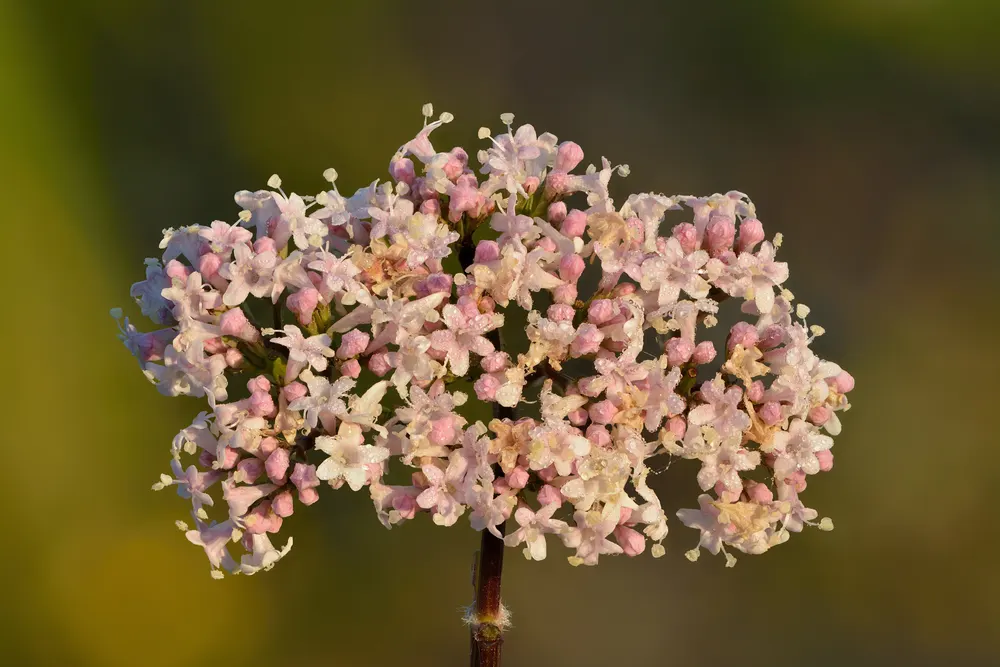
Photo: Ivar Leidus, CC BY-SA 4.0 (via Wikimedia Commons)
Valerian
Valeriana officinalis
Also known as Garden Valerian, All-Heal, Setwall, Amantilla, Vandal Root
Key benefits
✦Traditional uses
✦Valerian has been steeping in European households since at least the days of ancient Greece, where physicians like Galen and Dioscorides recommended it for a mind that would not quiet down. By the Middle Ages it had earned the nickname 'all-heal' for how widely it was reached for, but its lasting reputation settled around one job in particular, helping a weary body find its way into rest. Herbalists in England, Germany, and beyond dried bundles of the root each autumn and kept them close at hand through the long, wakeful nights of winter. Its earthy, rather pungent smell became so familiar in apothecary shops that generations of people came to associate that scent itself with the promise of a good night's sleep.
How to grow & use it
✦The full apothecary for Valerian
Traditional remedies and step-by-step preparations, a complete growing guide, and how to harvest, dry, and store it, all unlocked with HerbLens Unlimited.
- ✦Remedies & preparations
- ✦ Growing guide
- ✦Harvest & storage
From under $6 a month. Free plant identifications always included.
- ✦Hops
- ✦Chamomile
- ✦Lemon balm
- ✦Passionflower
- ✦Chamomile
- ✦Lemon balm
“When the mind will not quiet and the night feels too long.”
Cats and rats find valerian root every bit as irresistible as cats find catnip, and old European folklore even credits the root with the Pied Piper's power to lure Hamelin's rats away, since he is said to have carried a supply of it in his pockets.
Valerian can cause drowsiness, so avoid driving or combining it with alcohol, sedatives, or sleep medication, and skip it in the weeks before surgery due to possible interaction with anesthesia. Not recommended during pregnancy or breastfeeding.