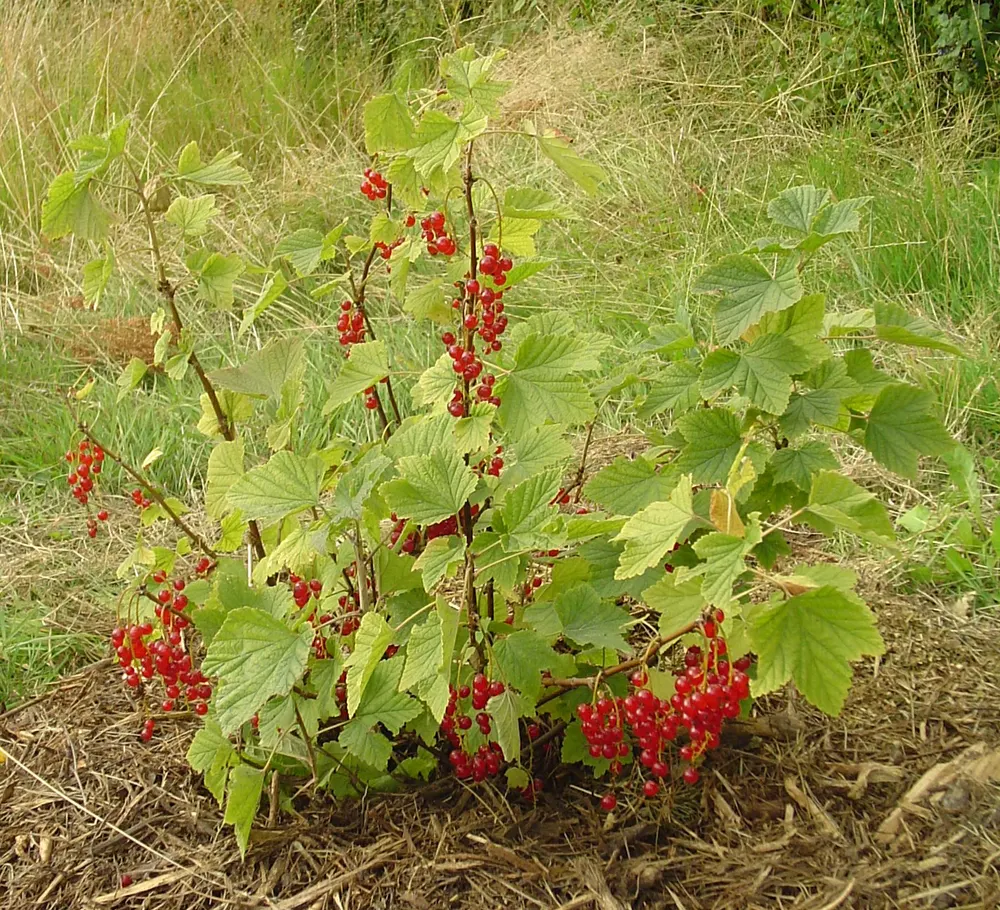
Photo: Public domain (via Wikimedia Commons)
Redcurrant
Ribes rubrum
Also known as Red Currant, Garden Currant, Northern Redcurrant
Key benefits
✦Traditional uses
✦Redcurrants have long been treasured in European kitchens and cottage gardens for their jewel-bright, tart berries, which were traditionally simmered into jellies, cordials, and syrups to see families through the cold months. The juice was traditionally given for feverish complaints and to gently ease the digestion, while the leaves were sometimes brewed into a tea used in old European folk medicine for gout and rheumatic aches. Long before refrigeration, a jar of redcurrant jelly was a fixture of the pantry shelf, a way of capturing summer's brightness for leaner days ahead.
How to grow & use it
✦The full apothecary for Redcurrant
Traditional remedies and step-by-step preparations, a complete growing guide, and how to harvest, dry, and store it, all unlocked with HerbLens Unlimited.
- ✦Remedies & preparations
- ✦ Growing guide
- ✦Harvest & storage
From under $6 a month. Free plant identifications always included.
- ✦Raspberry
- ✦Mint
- ✦Elderflower
- ✦Blackcurrant
- ✦Cranberry
“For a burst of tart, jewel-bright brightness on the darkest winter table.”
Redcurrant is a close cousin of the blackcurrant and gooseberry, all sharing the genus Ribes, but it was its milder tartness and glowing, translucent berries that made redcurrant jelly the classic companion to roast lamb and game across British and Scandinavian kitchens.
Redcurrants are a well-established, safe food, though unripe or large amounts of the tart berries can cause mild digestive upset in some people.