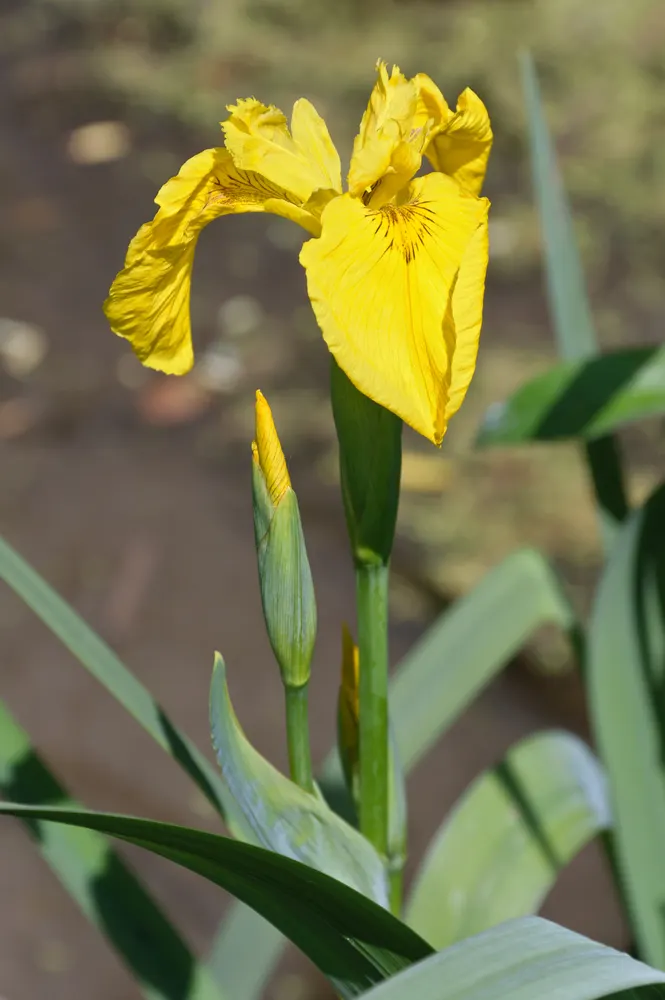
Photo: Myrabella, CC BY-SA 3.0 (via Wikimedia Commons)
Yellow Flag Iris
Iris pseudacorus
Also known as Yellow Iris, Water Flag, Paleyellow Iris, Yellow Water Iris
Key benefits
✦Traditional uses
✦Yellow flag iris has stood at the water's edge of European folklore for centuries, more often admired and drawn than ever eaten. Its blackened rhizome, boiled down with iron salts, gave rise to some of the darkest inks and dyes used by dyers and scribes, and many botanists believe this very iris, not the cultivated garden iris, is the true source of the fleur-de-lis emblem carried by French kings. Older herbal texts do record the root being used in tiny, carefully measured doses as a purgative, but this practice was always risky and has been abandoned as its toxicity became better understood. Today the plant is valued far more for the life it shelters at a pond's edge than for anything taken from it.
How to grow & use it
✦The full apothecary for Yellow Flag Iris
Traditional remedies and step-by-step preparations, a complete growing guide, and how to harvest, dry, and store it, all unlocked with HerbLens Unlimited.
- ✦Remedies & preparations
- ✦ Growing guide
- ✦Harvest & storage
From under $6 a month. Free plant identifications always included.
- ✦Pickerelweed
- ✦Blue Flag Iris
- ✦Cattail
- ✦Blue Flag Iris (Iris versicolor, also non-ingestible and toxic, used for the same dye purposes)
- ✦Black walnut hull (for a similarly dark, traditional plant-based dye)
“For the muddy, water-soaked edge where little else dares to bloom so boldly.”
Many botanical historians believe the fleur-de-lis, the elegant three-petaled emblem of French royalty, was drawn not from the cultivated garden iris but from the wild yellow flag growing along the River Lys in Flanders.
Every part of yellow flag iris, especially the thick rhizome, contains irritant glycosides (chiefly iridin) that are toxic if eaten, causing nausea, vomiting, and diarrhea, and the fresh sap can irritate or blister skin and eyes on contact, so gloves are strongly advised when dividing or handling the roots. The plant is also considered toxic to dogs, cats, and livestock, and in much of North America it is classified as an invasive or noxious wetland weed, so check local regulations before planting it near ponds or waterways. This entry is included for botanical and garden reference only, not as a plant to gather for tea, tincture, or any other internal preparation. If ingestion occurs, or before using any part of this plant for any purpose, consult a qualified poison control resource or healthcare professional.