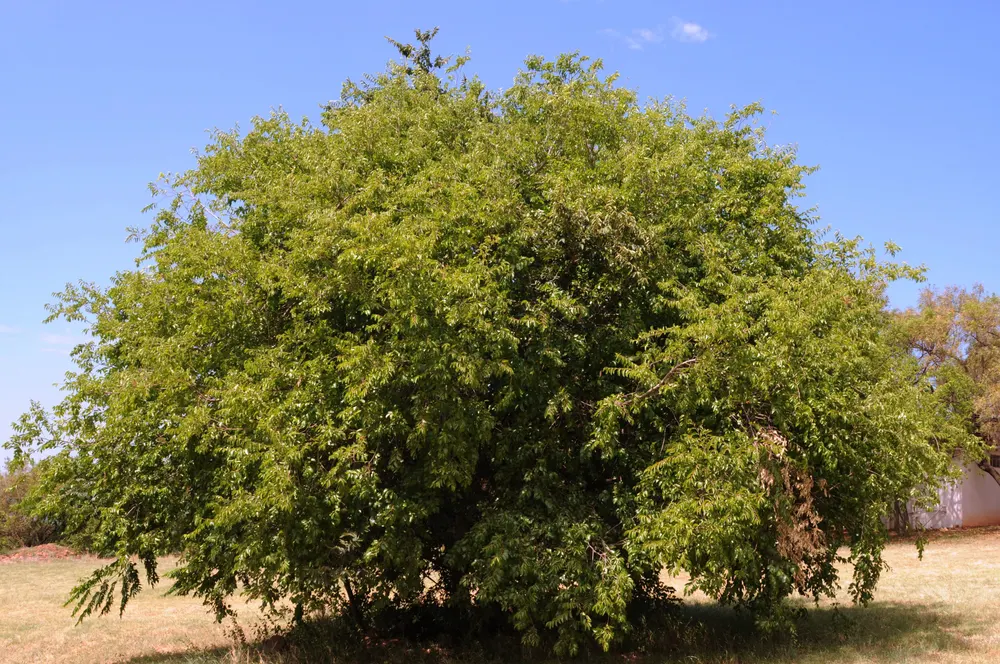
Photo: JMK, CC BY-SA 4.0 (via Wikimedia Commons)
Buffalo Thorn
Ziziphus mucronata
Also known as Wait-a-bit Tree, Zulu: Umphafa, Karee-doring, Mokgalo, Blinkblaar-wag-'n-bietjie
Key benefits
✦Traditional uses
✦Across southern Africa, buffalo thorn has long been treated as something closer to a household pharmacy than a mere hedge tree. Zulu, Sotho, and Tswana healers have traditionally simmered the bark and root into decoctions used as washes for sores, boils, and minor wounds, while a leaf infusion was sipped for coughs, sore throats, and an unsettled stomach. The tree carries just as much weight in ceremony as in the medicine chest. A branch, with its paired thorns, one hooked backward and one pointing forward, has traditionally been carried behind a funeral procession and left at the grave, believed to guide a departed spirit safely home while keeping the living tethered to memory. Its dense, thorny growth also made it a traditional choice for livestock kraals and homestead boundaries, valued as much for protection as for healing.
How to grow & use it
✦The full apothecary for Buffalo Thorn
Traditional remedies and step-by-step preparations, a complete growing guide, and how to harvest, dry, and store it, all unlocked with HerbLens Unlimited.
- ✦Remedies & preparations
- ✦ Growing guide
- ✦Harvest & storage
From under $6 a month. Free plant identifications always included.
- ✦Rooibos
- ✦Honeybush
- ✦Lemongrass
- ✦Jujube (Ziziphus jujuba)
- ✦Hawthorn
“For the hardy, storied elder of the African bushveld, a tree that has sheltered cattle, healed skin, and carried the dead home for generations.”
Buffalo thorn carries two very different thorns side by side at each node, one hooked backward, one straight and forward-facing. In Zulu tradition this pairing is read as a lesson in living: always look back to honor where you came from, but keep moving toward where you are going.
Buffalo thorn leaf is used traditionally in modest amounts, but bark and root preparations are stronger and shouldn't be self-dosed by pregnant or breastfeeding people, young children, or anyone on medication. The tree's sharp thorns can also cause puncture wounds.