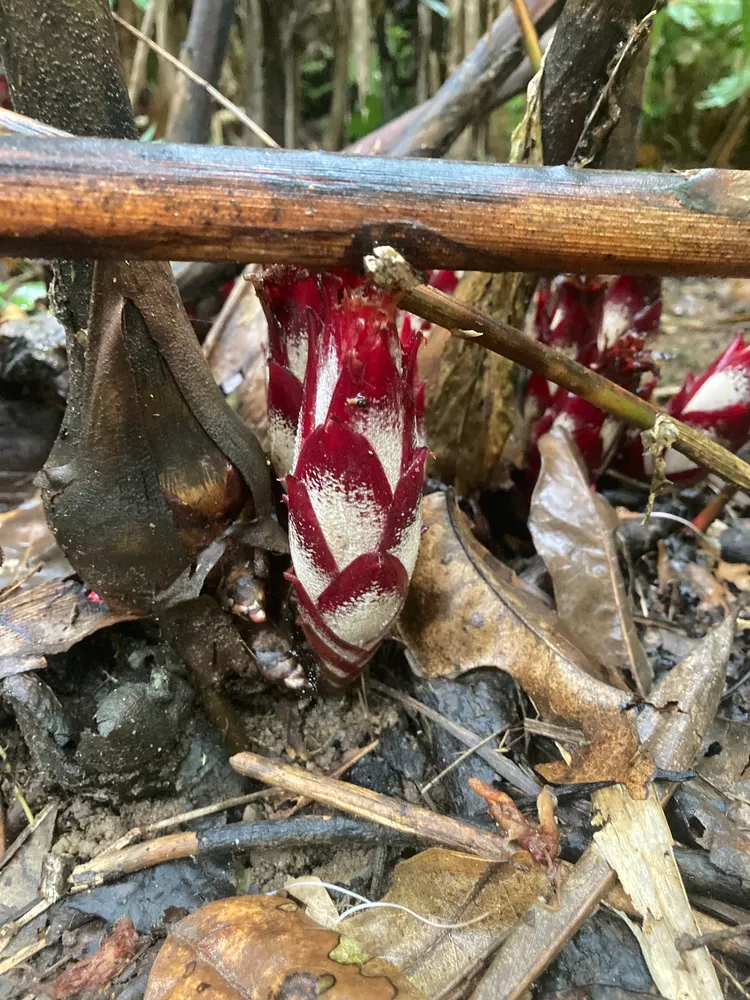
Photo: (c) Samuel Brown, some rights reserved (CC BY), CC BY 4.0 (via Wikimedia Commons)
Native Ginger
Hornstedtia scottiana
Also known as Scott's Ginger, Native Ginger of the Wet Tropics
Key benefits
✦Traditional uses
✦Long before botanists gave it a Latin name, this ginger was known to the Aboriginal peoples of the Queensland rainforest as a reliable trailside snack. Foragers would split open the ridged red capsules that cluster at the base of the plant and suck the tangy white pulp from around the seeds, prized for its sharp, refreshing sourness on a humid walk through the forest. It sits within a much larger tradition across the wet tropics and New Guinea, where wild gingers of the Hornstedtia genus were gathered as bush food rather than grown in gardens, valued for what the forest offered rather than what people planted. Cassowaries favor the same fruit, and in swallowing the seeds whole and carrying them off through the understory, they have quietly helped this ginger spread through the forest for longer than anyone has been keeping track.
How to grow & use it
✦The full apothecary for Native Ginger
Traditional remedies and step-by-step preparations, a complete growing guide, and how to harvest, dry, and store it, all unlocked with HerbLens Unlimited.
- ✦Remedies & preparations
- ✦ Growing guide
- ✦Harvest & storage
From under $6 a month. Free plant identifications always included.
- ✦Finger lime
- ✦Davidson's plum
- ✦Lemon myrtle
- ✦Finger lime
- ✦Davidson's plum
“For the forager who follows a cassowary's trail deep into the green hush of the wet tropics.”
The flower spikes of this ginger do not appear at the tips of the leafy canes at all. They push straight up from the rhizome at ground level, low among the leaf litter, so the bright red blooms and fruit clusters seem to be growing directly out of the forest floor.
Native ginger is eaten as a bush food, but several look-alike gingers grow nearby that are unpalatable or irritating, so correct identification by an experienced forager is essential before eating it.