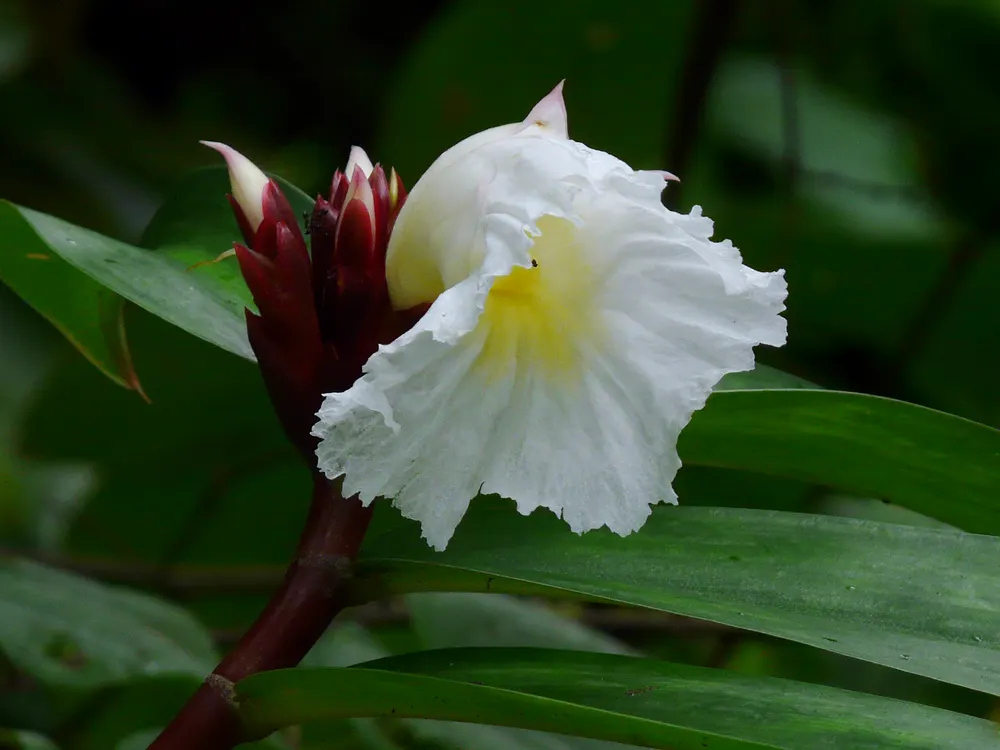
Photo: Dinesh Valke from Thane, India, CC BY-SA 2.0 (via Wikimedia Commons)
Crepe Ginger
Costus speciosus
Also known as Crepe Ginger, Spiral Ginger, Spiral Flag, Wild Ginger, Cheilocostus speciosus (botanical synonym)
Key benefits
✦Traditional uses
✦Long before it found its way into ornamental gardens for its spiraling stems and crepe-paper blossoms, Costus speciosus was a workhorse of the village healer's kit across India and Southeast Asia. Ayurvedic and folk traditions turned to the pounded rhizome for coughs, fevers, and troubled digestion, and it earned a place alongside ginger and turmeric in household remedy cabinets. Temple gardens have grown it for generations as much for its beauty as its usefulness, and its Sanskrit name, kebuka, still echoes through old medical texts. Modern researchers have taken a particular interest in the rhizome's saponin content, which resembles compounds found in wild yam.
How to grow & use it
✦The full apothecary for Crepe Ginger
Traditional remedies and step-by-step preparations, a complete growing guide, and how to harvest, dry, and store it, all unlocked with HerbLens Unlimited.
- ✦Remedies & preparations
- ✦ Growing guide
- ✦Harvest & storage
From under $6 a month. Free plant identifications always included.
- ✦Ginger
- ✦Turmeric
- ✦Holy basil (tulsi)
- ✦Wild yam root
- ✦Fresh ginger
“For the quiet, cooling comfort that traditional healers once reached for when a cough lingered too long.”
The rhizome's saponin diosgenin is chemically close to the compound once extracted from wild yam to help pioneer early steroid hormone research, a curious modern echo of a plant villages had already trusted for generations.
The rhizome contains steroidal saponins linked to effects on uterine activity, so avoid during pregnancy and breastfeeding. Eating the raw rhizome or large amounts of any preparation can upset the stomach.