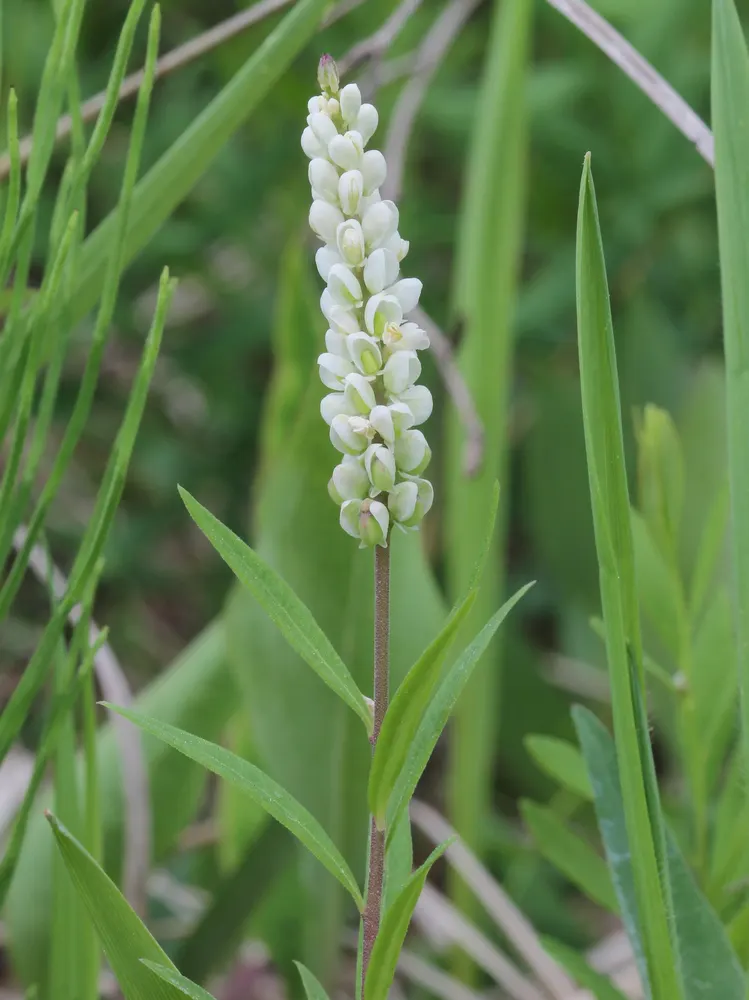
Photo: Rob Routledge, Sault College, Bugwood.org, CC BY 3.0 us (via Wikimedia Commons)
Seneca Snakeroot
Polygala senega
Also known as Senega Root, Rattlesnake Root, Mountain Flax, Senega Snakeroot
Key benefits
✦Traditional uses
✦Seneca snakeroot takes its common name from the Seneca people, part of the Haudenosaunee Confederacy, who are credited with introducing colonial physicians to the root's use for coughs, croup, and congestion in the chest. Word of it spread quickly through eighteenth century medicine, and by the following century the dried root had become an official entry in both the United States and British Pharmacopoeias, prized as an expectorant meant to loosen and move stubborn phlegm. It was also woven into a long-standing folk belief, tied to its snake-like coiled root, that it could counter snakebite, a use that reflects the doctrine of signatures more than confirmed effect. What has endured across two centuries is its reputation as a respiratory herb, a humble prairie root that once sat in nearly every apothecary's cabinet.
How to grow & use it
✦The full apothecary for Seneca Snakeroot
Traditional remedies and step-by-step preparations, a complete growing guide, and how to harvest, dry, and store it, all unlocked with HerbLens Unlimited.
- ✦Remedies & preparations
- ✦ Growing guide
- ✦Harvest & storage
From under $6 a month. Free plant identifications always included.
- ✦Wild cherry bark
- ✦Licorice root
- ✦Mullein leaf
- ✦Elecampane root
- ✦Horehound
“For the damp, rattling cough that just will not let go, and the chest that needs coaxing open.”
Seneca snakeroot earned its name from the twisted, ridged shape of its root, which early observers thought resembled a coiled rattlesnake. Under the old doctrine of signatures, a plant that looked like the ailment or its cause was believed to treat it, and so the root passed into colonial medicine as a supposed remedy for snakebite. Its true legacy turned out to be respiratory, not venomous, as it became one of the most widely used expectorants in nineteenth century Western pharmacy.
Rich in saponins that can cause nausea, vomiting, and diarrhea in excess. Avoid during pregnancy, breastfeeding, and with young children, and use caution with blood-thinning medications or an existing ulcer or gastritis.