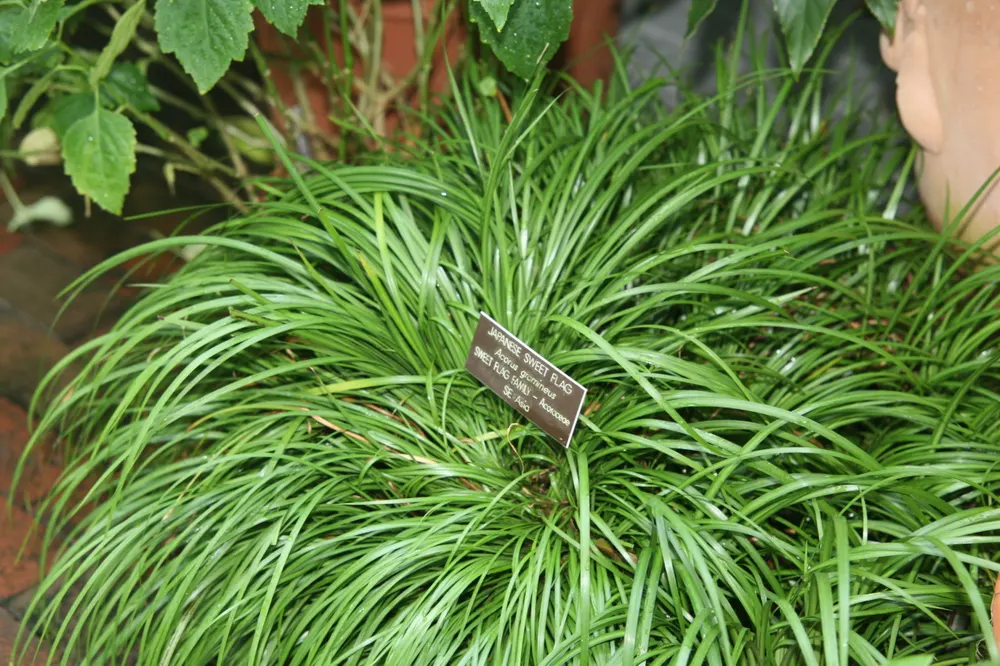
Photo: Cliff, CC BY 2.0 (via Wikimedia Commons)
Japanese Sweet Flag
Acorus gramineus
Also known as Grassy-leaved Sweet Flag, Dwarf Sweet Flag, Japanese Rush, Shi Chang Pu, Sekisho
Key benefits
✦Traditional uses
✦Under the name Shi Chang Pu, the rhizome of grass-leaf Acorus has a long history in Chinese herbal medicine, where old texts describe it as a plant that was traditionally used to sharpen thinking and to ease conditions herbalists described as damp-phlegm clouding the mind. In Japan, where it is called sekisho, dwarf forms of the plant were grown in shallow pots on scholars' writing desks for centuries, admired for surviving on little more than water and pebbles while releasing a clean, faintly spicy fragrance when its leaves were bruised. It traveled from the wild, mucky edges of ponds and rice paddies into the refined world of literati gardens, prized as much for its quiet resilience as for any remedy made from it. Today it is grown far more often for beauty than for medicine.
How to grow & use it
✦The full apothecary for Japanese Sweet Flag
Traditional remedies and step-by-step preparations, a complete growing guide, and how to harvest, dry, and store it, all unlocked with HerbLens Unlimited.
- ✦Remedies & preparations
- ✦ Growing guide
- ✦Harvest & storage
From under $6 a month. Free plant identifications always included.
- ✦Poria (Fu Ling), a classic TCM formula companion
- ✦Polygala (Yuan Zhi), traditionally paired for mental clarity formulas
- ✦Ginseng, used alongside it in some historic tonic blends
- ✦Acorus calamus (true sweet flag), a closely related species with its own significant cautions
- ✦Ginkgo leaf, used in some herbal traditions for mental focus
“For the quiet green fringe of a pond, or a living echo of an old scholar's writing desk.”
For centuries, dwarf cultivars of Acorus gramineus were kept in shallow pots on the desks of Chinese and Japanese scholars, who prized the plant for thriving on almost nothing but water, pebbles, and patience.
Japanese sweet flag rhizome contains asarone compounds linked to genotoxic and carcinogenic effects in animal studies, and it is banned as a food additive in the US, so it should not be self-prepared as a tea or supplement at home. Avoid it during pregnancy and breastfeeding, and be aware it may interact with sedative medications; it's best enjoyed as an ornamental grass rather than a home remedy.