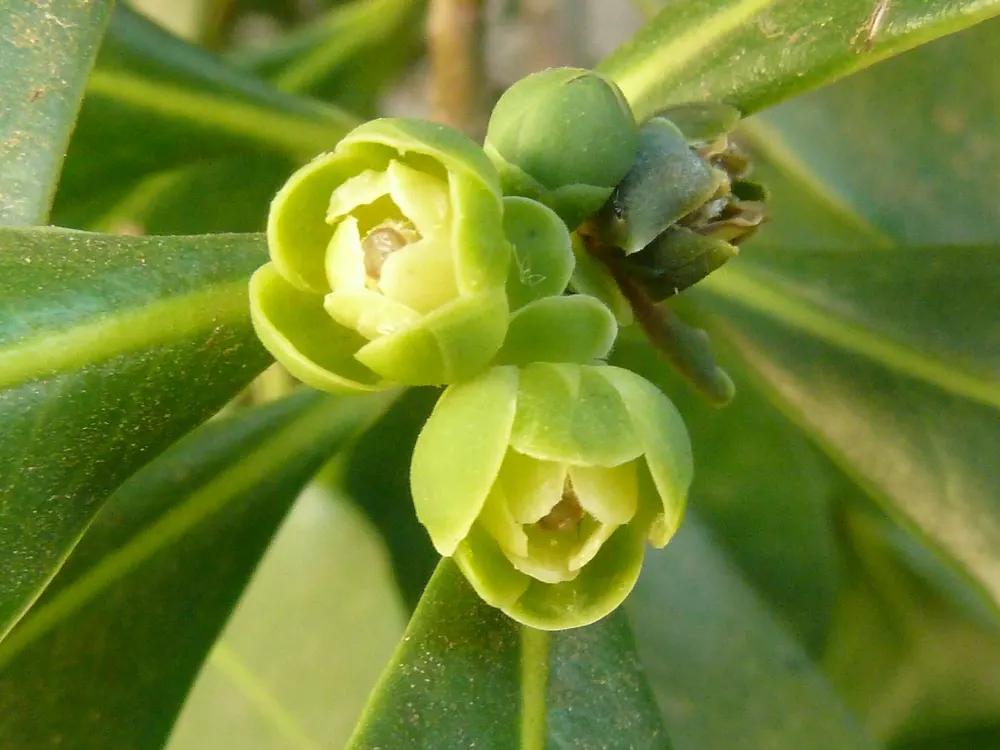
Photo: JMK, CC BY-SA 3.0 (via Wikimedia Commons)
Pepper-Bark Tree
Warburgia salutaris
Also known as Pepper-bark, Isibhaha (Zulu), Fever tree (regional name, shared with other species)
Key benefits
✦Traditional uses
✦Among the Zulu, Swazi, Shangaan, and other southern African peoples, the pepper-bark tree has long been considered one of the most important trees in the medicine chest, its fiery, peppery bark chewed or brewed into a tea at the first sign of a cold, flu, sinus trouble, or sore throat. Traditional healers also turned to it for coughs, stomach cramps, and as a general warming tonic through the cold, damp months. Its reputation ran so deep that the tree became one of the most sought after in the region, bartered and carried far from where it grew. That same popularity, sadly, is what pushed it to the edge of survival in the wild, making today's cultivated trees all the more precious.
How to grow & use it
✦The full apothecary for Pepper-Bark Tree
Traditional remedies and step-by-step preparations, a complete growing guide, and how to harvest, dry, and store it, all unlocked with HerbLens Unlimited.
- ✦Remedies & preparations
- ✦ Growing guide
- ✦Harvest & storage
From under $6 a month. Free plant identifications always included.
- ✦African wormwood (Artemisia afra)
- ✦Fresh ginger
- ✦Honey
- ✦African wormwood (Artemisia afra), a far more abundant southern African herb used for similar cold and flu complaints
- ✦Ginger, for a gentler, more sustainable source of warming, pungent bite
“For the old African tradition of meeting a cold head-on with warmth and bite, from a tree now precious enough to deserve careful stewardship.”
Chewing a sliver of the bark delivers such an intense, peppery heat on the tongue that researchers isolated the compound responsible, warburganal, as one of the hottest-tasting substances ever found in a plant, so fiery that scientists study it as a natural insect deterrent.
This tree is critically endangered from overharvesting, so use only cultivated, nursery grown bark, never wild-harvested material. The bark is intensely hot and pungent and can irritate the mouth, throat, and stomach if used beyond small traditional amounts.