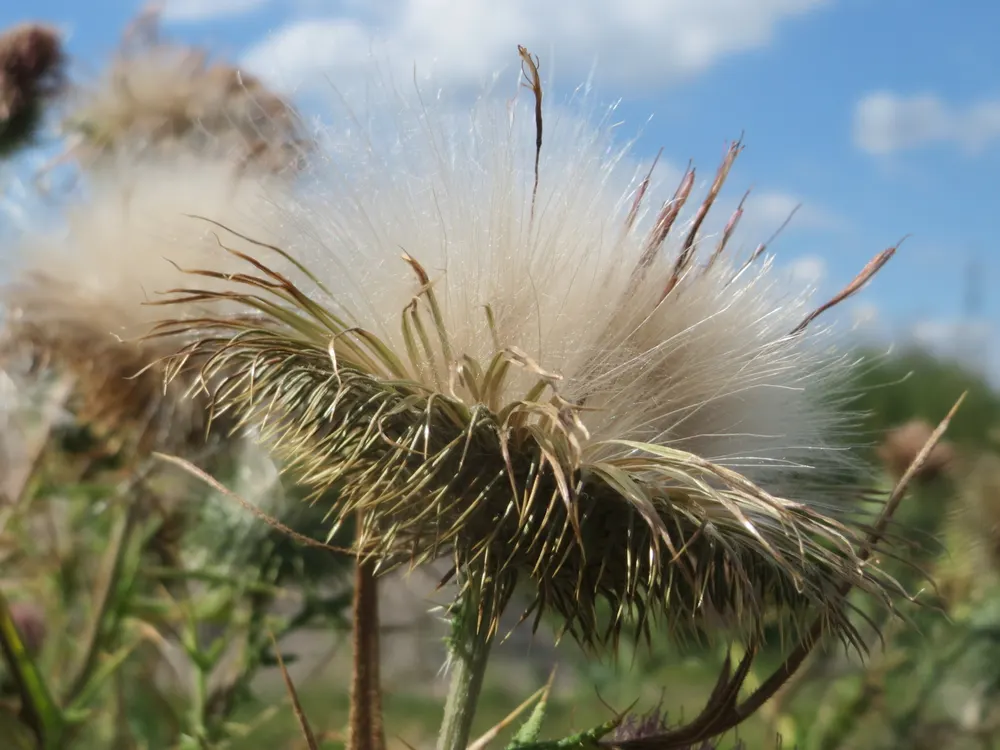
Photo: AnRo0002, CC0 (via Wikimedia Commons)
Bull Thistle
Cirsium vulgare
Also known as Spear Thistle, Common Thistle, Boar Thistle
Key benefits
✦Traditional uses
✦Long before it was dismissed as a roadside nuisance, bull thistle was gathered as food and medicine by foragers on both sides of the Atlantic. Its peeled stems and taproot were treated much like a wild cousin of the artichoke, boiled or roasted as a vegetable in lean seasons, while the bitter leaf and flower were brewed into a folk tea thought to settle the stomach and encourage the kidneys to do their quiet work. Bruised leaves were sometimes bound over cuts, boils, and stings as a simple field poultice. It never rose to the fame of its relative milk thistle, but country herbalists kept a place for it as a humble, everyday plant that grew wherever people needed it most.
How to grow & use it
✦The full apothecary for Bull Thistle
Traditional remedies and step-by-step preparations, a complete growing guide, and how to harvest, dry, and store it, all unlocked with HerbLens Unlimited.
- ✦Remedies & preparations
- ✦ Growing guide
- ✦Harvest & storage
From under $6 a month. Free plant identifications always included.
- ✦Dandelion
- ✦Nettle
- ✦Peppermint
- ✦Milk thistle
- ✦Burdock root
“For the overlooked feast growing wild at the edge of every field, waiting for someone patient enough to peel past its spines.”
Legend holds that a barefoot Norse raider crept toward a sleeping Scottish camp at night, stepped on a thistle, and cried out in pain, waking the defenders in time. That story is often told of the thistle that became Scotland's emblem, and bull thistle is one of the prickly contenders behind the tale.
Bull thistle is not toxic, but its stiff spines can cause painful puncture wounds, so handle it with thick gloves and remove the prickles before eating. As a daisy-family plant, it may cause reactions in people sensitive to ragweed or related plants.