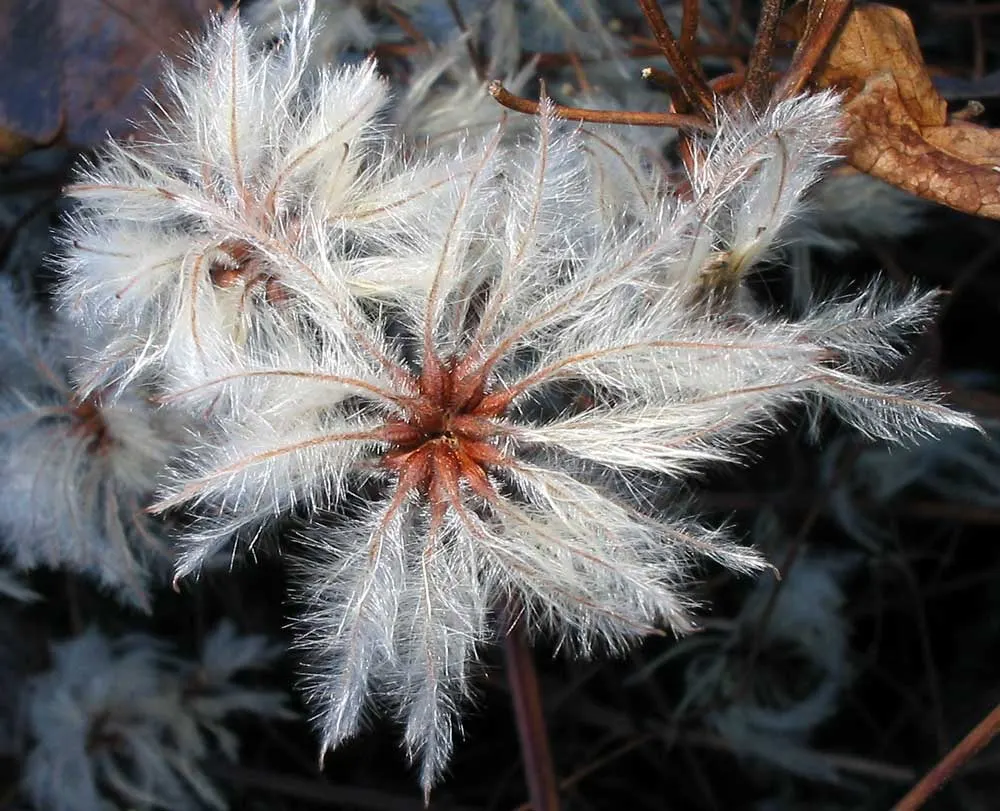
Photo: Michael Gasperl (Migas), CC BY-SA 3.0 (via Wikimedia Commons)
Old Man's Beard
Clematis vitalba
Also known as Old Man's Beard, Traveller's Joy, Beggar's Weed, Old Man's Wig
Key benefits
✦Traditional uses
✦Traveller's Joy earned its cheerful name from the way its silvery seed heads brightened long stretches of English hedgerow for winter walkers and wayfarers. Country crafters once used its long, pliable stems, sometimes called withies, for rough cordage and basket work, and gardeners have grown it for centuries purely for its billowing autumn display. It carries a darker folk history too, since old accounts describe beggars deliberately rubbing the acrid sap on their skin to raise sores and win sympathy, a practice remembered in the old country name Beggar's Weed. That same acrid sap is the reason this plant has never held a place as a safe household remedy.
How to grow & use it
✦The full apothecary for Old Man's Beard
Traditional remedies and step-by-step preparations, a complete growing guide, and how to harvest, dry, and store it, all unlocked with HerbLens Unlimited.
- ✦Remedies & preparations
- ✦ Growing guide
- ✦Harvest & storage
From under $6 a month. Free plant identifications always included.
“When the hedgerow goes silver and shaggy with its winter beard, you know autumn has settled in for good.”
The fluffy white "beard" that gives this vine its name is not a flower at all. It is the feathery, hairy style left attached to each seed, a built-in parachute that lets the wind carry it far from the parent plant, which is part of why it spreads so readily wherever it takes hold.
All parts of Clematis vitalba contain protoanemonin, an irritant compound released from the glycoside ranunculin when the plant's tissue is bruised, cut, or crushed. Fresh sap and foliage can cause painful blistering, dermatitis, and eye irritation on contact, and chewing or swallowing any part of the plant can burn the mouth and throat and upset the stomach. It carries no established history of safe internal use in herbal medicine, and old folk accounts of beggars using the sap to deliberately raise sores on their own skin underline just how irritating it is. Always wear gloves when pruning or handling this vine, keep it well out of reach of children and pets, and never prepare it as a tea, tincture, or any other home remedy. If skin, eye, or mouth contact occurs, rinse thoroughly and seek medical attention, and speak with a qualified healthcare professional or poison control center with any concerns.