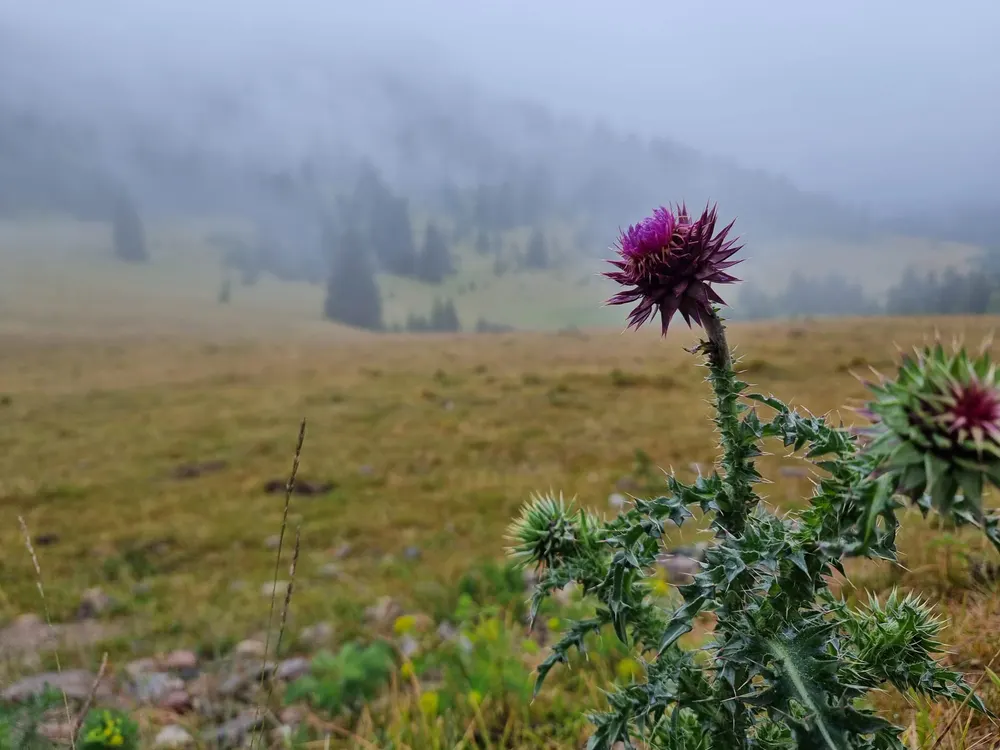
Photo: Andreiflorea993, CC BY-SA 4.0 (via Wikimedia Commons)
Musk Thistle
Carduus nutans
Also known as Nodding Thistle, Nodding Plumeless Thistle
Key benefits
✦Traditional uses
✦Musk thistle arrived in North America from Europe and western Asia and quickly made itself at home along roadsides and pastures, where foragers soon discovered it was more friend than foe. Once the outer rind is peeled away, the tender stalk beneath tastes something like celery crossed with artichoke, a cousin's resemblance that makes sense since musk thistle belongs to the same tribe of the daisy family as the garden artichoke and cardoon. The unopened flower buds were sometimes simmered and eaten much like miniature artichoke hearts, and in old European kitchen gardens the peeled roots were boiled as a humble root vegetable in lean seasons. In folk herbalism, a mild tea from the root was occasionally taken as a bitter digestive tonic, in the same gentle tradition as other thistle roots.
How to grow & use it
✦The full apothecary for Musk Thistle
Traditional remedies and step-by-step preparations, a complete growing guide, and how to harvest, dry, and store it, all unlocked with HerbLens Unlimited.
- ✦Remedies & preparations
- ✦ Growing guide
- ✦Harvest & storage
From under $6 a month. Free plant identifications always included.
- ✦Dandelion root
- ✦Ginger
- ✦Peppermint
- ✦Milk thistle root
- ✦Burdock root
“When the roadside blushes purple and the heavy heads begin to nod, the wild vegetable patch has arrived.”
The name nutans is Latin for nodding, and it fits perfectly: once a musk thistle flower head matures, its stem bends over and the heavy purple bloom bows toward the ground, unlike most thistles that hold their heads upright. American goldfinches time their nesting to the plant's summer bloom, lining their nests with its soft seed down.
Not toxic when properly prepared, but the spiny stems and leaves can cause painful punctures, so wear gloves and peel stems before eating. It's a regulated noxious weed in many regions, so check local rules before growing it, and those with ragweed or daisy-family allergies may react to it.