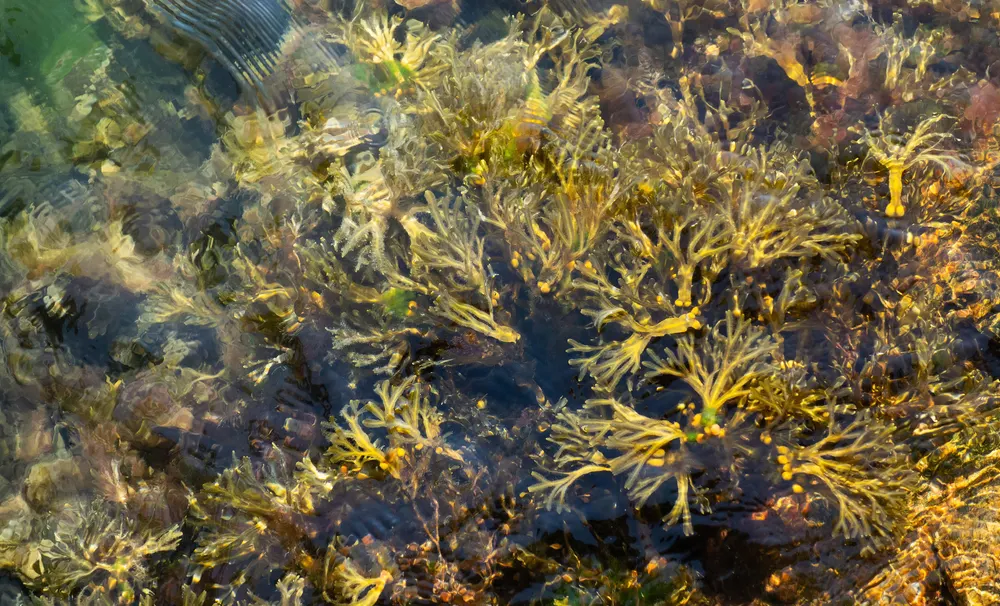
Photo: W.carter, CC0 (via Wikimedia Commons)
Bladderwrack
Fucus vesiculosus
Also known as Rockweed, Sea Oak, Black Tang, Kelp-ware, Red Fucus
Key benefits
✦Traditional uses
✦Long before iodine was known as an element, coastal communities in Europe dried and burned bladderwrack, and steeped it in teas, to ease the swollen throats we now recognize as goiter. Fisherfolk and herbalists along the Atlantic and Baltic shores also turned to it for sluggish digestion, and its slick, mucilage-rich fronds were bundled into warm baths thought to soothe tired joints and soften the skin. By the nineteenth century it had become a staple of European folk medicine, prized simply as the plant that tasted of the sea and seemed to carry the sea's vigor with it. Thalassotherapy spas later built entire treatments around its briny, gel-like richness.
How to grow & use it
✦The full apothecary for Bladderwrack
Traditional remedies and step-by-step preparations, a complete growing guide, and how to harvest, dry, and store it, all unlocked with HerbLens Unlimited.
- ✦Remedies & preparations
- ✦ Growing guide
- ✦Harvest & storage
From under $6 a month. Free plant identifications always included.
- ✦Kelp
- ✦Nettle
- ✦Dandelion root
- ✦Kelp (Laminaria species)
- ✦Dulse
“For when you want the old apothecary's reach past the garden gate, straight down to the tide line.”
The plant's paired air bladders, the little pockets that give bladderwrack its name and let it float upright at high tide, made it one of the seaweeds coastal communities burned for kelp ash. That practice of processing seaweed ash for industry was part of the very trail that led chemists to isolate the element iodine in the early 1800s.
Bladderwrack is very high in iodine, and regular or large amounts can disrupt thyroid function and interact with thyroid medication, so it's not recommended during pregnancy or breastfeeding. Like other seaweeds it can accumulate heavy metals from the water it grows in, and it may have a mild blood-thinning effect worth noting alongside anticoagulant medications.