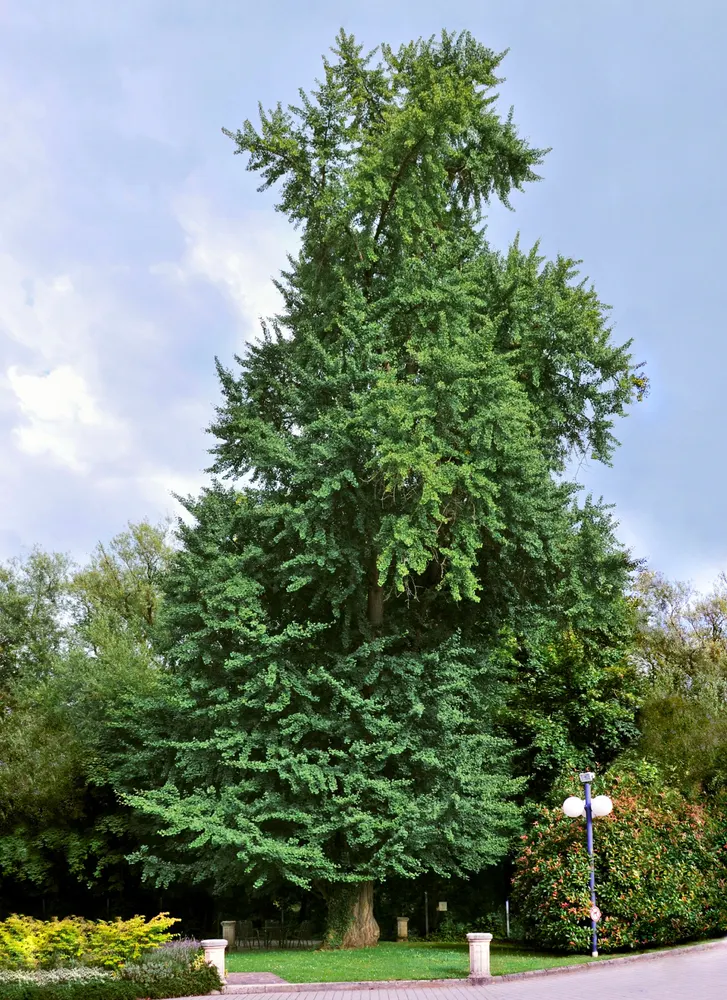
Photo: EecherplazGinkgo06.jpg: Cayambe derivative work: Ginkgotree (talk), CC BY-SA 3.0 (via Wikimedia Commons)
Ginkgo
Ginkgo biloba
Also known as Maidenhair Tree, Ginkyo, Yinxing, Silver Apricot
Key benefits
✦Traditional uses
✦Ginkgo is one of the oldest tree species on Earth, essentially unchanged for over two hundred million years, and its leaves have been valued in Traditional Chinese Medicine for centuries to support the lungs and circulation. The tree itself became a symbol of endurance and long life, planted beside temples and passed down through generations. In the twentieth century, Western herbalists and researchers took a fresh interest in ginkgo leaf, and standardized extracts became some of the most widely used botanical preparations in Europe for supporting healthy circulation and mental clarity in later life. Today the leaf is still gathered each autumn much as it always has been, dried, and steeped into a simple tea.
How to grow & use it
✦The full apothecary for Ginkgo
Traditional remedies and step-by-step preparations, a complete growing guide, and how to harvest, dry, and store it, all unlocked with HerbLens Unlimited.
- ✦Remedies & preparations
- ✦ Growing guide
- ✦Harvest & storage
From under $6 a month. Free plant identifications always included.
- ✦Gotu Kola
- ✦Rosemary
- ✦Hawthorn
- ✦Gotu Kola
- ✦Rosemary
“For the mind that wants clarity, and roots that have outlasted empires.”
Six ginkgo trees growing close to the epicenter of the Hiroshima atomic bombing in 1945 survived and are still alive today, and are now honored in Japan as symbols of hope and resilience.
Ginkgo leaf can increase bleeding risk, so avoid it alongside blood thinners like warfarin or aspirin and stop before surgery. Raw or roasted seeds are genuinely toxic and have caused seizures, and fresh contact with the seed coat can cause a skin rash.