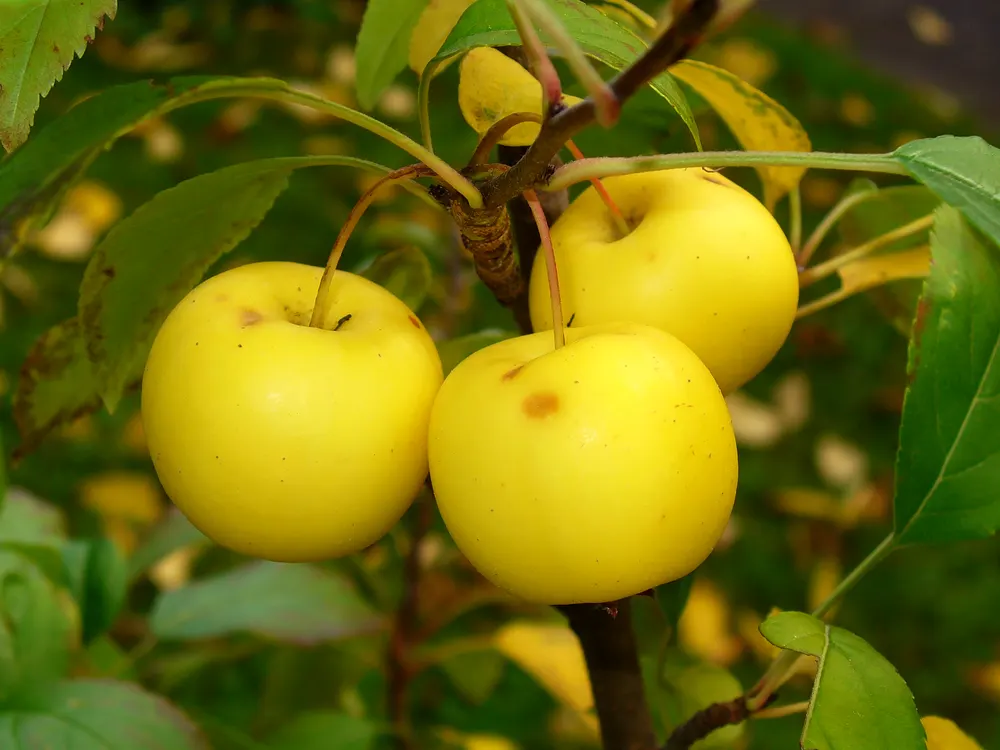
Photo: H. Zell, CC BY-SA 3.0 (via Wikimedia Commons)
Crab Apple
Malus sylvestris
Also known as European Crab Apple, Wild Apple, Wilding
Key benefits
✦Traditional uses
✦Long before the sweet dessert apple was bred up from it, Malus sylvestris grew wild through the hedgerows of Europe, its small, sour fruit gathered each autumn for jellies, verjuice, and a sharp cider called crab wine. Country folk pressed the tart juice into a household remedy for coughs and sore throats, and simmered the bark into a bitter decoction traditionally used to ease fevers and settle an unsettled stomach. The blossom, foaming pink and white over hedgerows every May, became so bound up with courtship and orchards that it lent its name to Glastonbury's old title, the Isle of Avalon, meaning isle of apples. Even the wood, dense and fine grained, was prized by carvers and turners for small tools and mallet heads.
How to grow & use it
✦The full apothecary for Crab Apple
Traditional remedies and step-by-step preparations, a complete growing guide, and how to harvest, dry, and store it, all unlocked with HerbLens Unlimited.
- ✦Remedies & preparations
- ✦ Growing guide
- ✦Harvest & storage
From under $6 a month. Free plant identifications always included.
- ✦Hawthorn
- ✦Rosehip
- ✦Cinnamon
- ✦Hawthorn berry
- ✦Quince
“For the tart, honest fruit of the old hedgerow, gathered as autumn turns the leaves.”
The crab apple is considered the ancestor of nearly every cultivated apple variety alive today, meaning the crisp, sweet apple in a modern lunchbox owes its existence to this small, sour hedgerow tree.
Crab apple fruit is safe and commonly used in cooking, but the seeds contain a small amount of a cyanide-producing compound and should not be chewed or eaten in quantity.