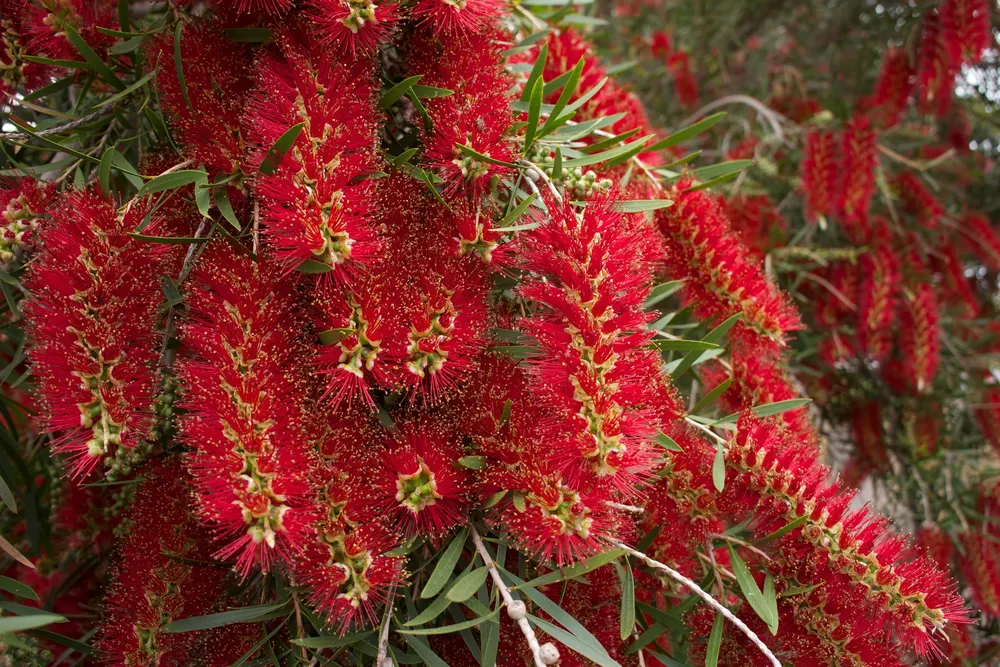
Photo: Geoff Fox, CC BY 3.0 (via Wikimedia Commons)
Weeping Bottlebrush
Callistemon viminalis
Also known as Weeping Bottlebrush, Willow Bottlebrush, Drooping Bottlebrush, Melaleuca viminalis (reclassified name)
Traditional uses
✦Weeping bottlebrush is, first and foremost, a plant of relationship rather than remedy. Along the rivers of eastern Australia, its nectar-laden red spikes have long drawn honeyeaters, lorikeets, and native bees, and Aboriginal communities in its home range are recorded soaking or sucking the sweet flower spikes for a refreshing, sugary drink, a simple bush tucker pleasure rather than a medicine. The tree's species name, viminalis, means bearing long flexible shoots, a nod to branches supple enough for weaving and binding, in the same tradition as willow osiers. Since the eighteenth century it has traveled far beyond its native creek banks to become one of the world's most beloved flowering hedge and specimen plants, valued everywhere for turning a garden into a haven for pollinators.
How to grow & use it
✦The full apothecary for Weeping Bottlebrush
Traditional remedies and step-by-step preparations, a complete growing guide, and how to harvest, dry, and store it, all unlocked with HerbLens Unlimited.
- ✦Remedies & preparations
- ✦ Growing guide
- ✦Harvest & storage
From under $6 a month. Free plant identifications always included.
- ✦Kangaroo paw
- ✦Grevillea
- ✦Lomandra
- ✦Callistemon citrinus (crimson bottlebrush)
- ✦Melaleuca species more broadly grown for similar aromatic, bird-friendly landscaping
“For the fence line or creek bank you want humming with honeyeaters, bees, and the occasional hummingbird, red brushes nodding on willowy branches.”
The genus name Callistemon comes from the Greek kallos, meaning beauty, and stemon, meaning stamen, because what looks like the flower's petals are actually a dense cylinder of showy stamens. Botanists have since folded Callistemon into the genus Melaleuca based on DNA evidence, so you may see this same plant sold as Melaleuca viminalis, even though gardeners the world over still call it bottlebrush.
Not used as food or medicine; the aromatic oils in the foliage can irritate skin or the gut in sensitive people, and the pollen can trigger allergic reactions in people and pets.