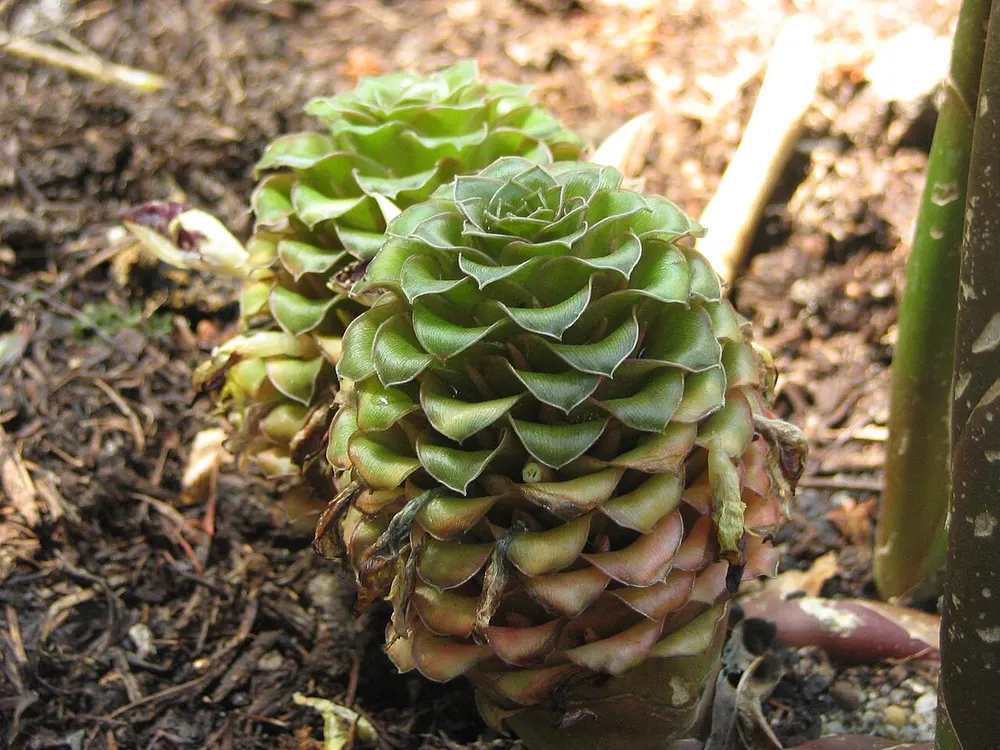
Photo: CC BY-SA 3.0 (via Wikimedia Commons)
Wray's Ginger
Zingiber wrayi
Key benefits
✦Traditional uses
✦Zingiber wrayi carries the name of Leonard Wray, a naturalist and museum curator who spent decades cataloguing the plants, minerals, and wildlife of Perak in the late 1800s, and whose name was attached to a long list of Malaysian species he helped bring to scientific attention. Unlike its famous cousin common ginger, this forest species has no well-documented history of culinary or medicinal use passed down through local tradition, at least none recorded in the available botanical literature. It survives instead in the quiet company of rainforest botanists and collectors, valued for its striking ground-level blooms and its place in the diversity of Southeast Asian gingers. Where common ginger became a kitchen staple carried across the world, Zingiber wrayi has stayed at home in the shaded hill forests where it was first collected.
How to grow & use it
✦The full apothecary for Wray's Ginger
Traditional remedies and step-by-step preparations, a complete growing guide, and how to harvest, dry, and store it, all unlocked with HerbLens Unlimited.
- ✦Remedies & preparations
- ✦ Growing guide
- ✦Harvest & storage
From under $6 a month. Free plant identifications always included.
- ✦Etlingera elatior (torch ginger)
- ✦Alpinia galanga (galangal)
- ✦Costus species
- ✦Zingiber officinale (common ginger)
- ✦Zingiber zerumbet (shampoo ginger)
“For the shaded corner of the garden that longs for the hush of a rainforest floor.”
The species name honors Leonard Wray, a Perak museum curator and naturalist of the late 1800s whose fieldwork across the Malay Peninsula led to dozens of species, from pitcher plants to gingers, being named in his honor.
Zingiber wrayi has no established history of food or medicinal use, so it should not be eaten, brewed, or applied to the skin. The fresh sap may irritate sensitive skin, like other gingers.