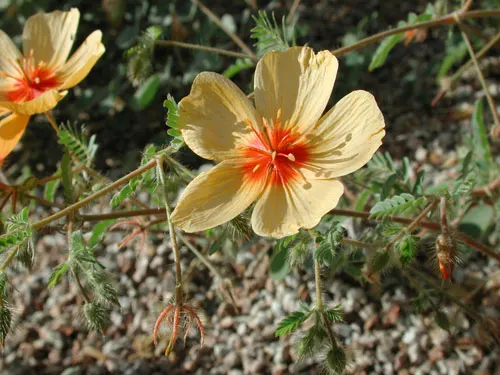
Photo: User:Pompilid, CC BY 2.5 (via Wikimedia Commons)
Arizona Poppy
Kallstroemia grandiflora
Also known as Summer Poppy, Orange Caltrop, Mexican Poppy, Desert Poppy
Key benefits
✦Traditional uses
✦Arizona poppy is not an old apothecary herb so much as a desert storyteller. Its copper-orange flowers appear like clockwork within days of the first summer monsoon, and for generations of desert dwellers that sudden carpet of color has served as a natural calendar, a sign that the rains have truly arrived and the ground has come back to life. Ranchers and naturalists across the Sonoran Desert have long watched for it as a marker of the changing season rather than reached for it as a remedy. Unlike its famous cousin in the caltrop family, puncture vine, Arizona poppy never built up a documented herbal medicine tradition, and it is best appreciated for what it plainly is: a resilient, beautiful wild bloom.
How to grow & use it
✦The full apothecary for Arizona Poppy
Traditional remedies and step-by-step preparations, a complete growing guide, and how to harvest, dry, and store it, all unlocked with HerbLens Unlimited.
- ✦Remedies & preparations
- ✦ Growing guide
- ✦Harvest & storage
From under $6 a month. Free plant identifications always included.
- ✦Desert marigold
- ✦Penstemon
- ✦Globe mallow
“For the wash floor the morning after a monsoon storm, when copper-orange petals open like a hundred small fires across the wet sand.”
Arizona poppy flowers keep true desert hours: they unfurl in the cool of early morning and fold themselves shut again by early afternoon, well before the harshest heat of the day sets in.
Arizona Poppy has no history of safe human use, and related Kallstroemia species have caused sun-sensitivity reactions in livestock that graze on them heavily, so keep it away from grazing animals. Treat it as a wildflower rather than a food or remedy.