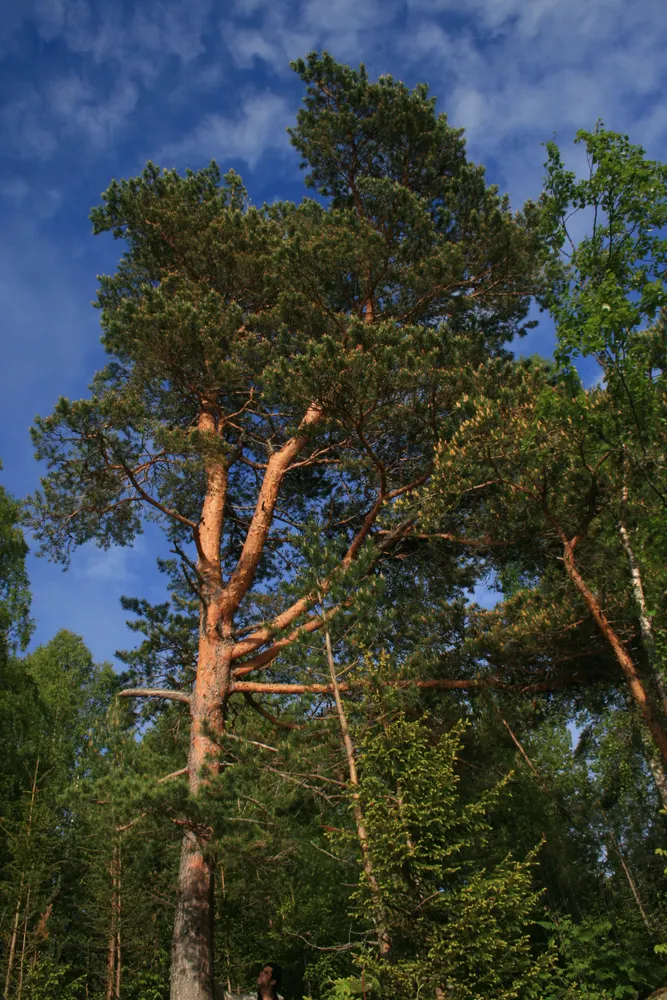
Photo: Mickaël Delcey (Silverkey), CC BY-SA 3.0 (via Wikimedia Commons)
Scots Pine
Pinus sylvestris
Also known as Scotch Pine, Scots Fir, Baltic Pine, European Redwood
Key benefits
✦Traditional uses
✦Long before citrus fruit could travel north, sailors and forest-dwelling peoples across Scandinavia, Russia, and the Baltic brewed pine needle tea to fend off scurvy through the dark winter months, prizing its sharp vitamin C content. In folk practice from the Sami to the Slavic countryside, the tender spring shoots were simmered into syrups traditionally used to soothe coughs and sore throats, while the sticky resin that beads on the bark was pressed into salves for cuts, chilblains, and rough skin. Pine boughs thrown onto hot sauna stones released a steam long believed to clear the lungs and lift the spirits, a custom still practiced in Finland today. The tree itself, standing sentinel in the old Caledonian Forest, has been woven into Northern European life for thousands of years as timber, tar, and medicine alike.
How to grow & use it
✦The full apothecary for Scots Pine
Traditional remedies and step-by-step preparations, a complete growing guide, and how to harvest, dry, and store it, all unlocked with HerbLens Unlimited.
- ✦Remedies & preparations
- ✦ Growing guide
- ✦Harvest & storage
From under $6 a month. Free plant identifications always included.
- ✦Thyme
- ✦Elderberry
- ✦Peppermint
- ✦Spruce needles
- ✦Fir needles
“For a bracing breath of the northern forest when winter colds settle in.”
Scots pine is the only pine native to Scotland, where ancient survivors of the old Caledonian Forest still stand, and some individual trees in Scandinavia have been documented living well past 700 years, making it one of the longest-lived trees in Europe.
Scots pine needles make a safe traditional tea in normal amounts, but the tree must not be confused with yew, a toxic look-alike evergreen whose needles and seeds can be fatal. Concentrated pine essential oil is not meant to be taken internally, and fresh resin can irritate the skin.