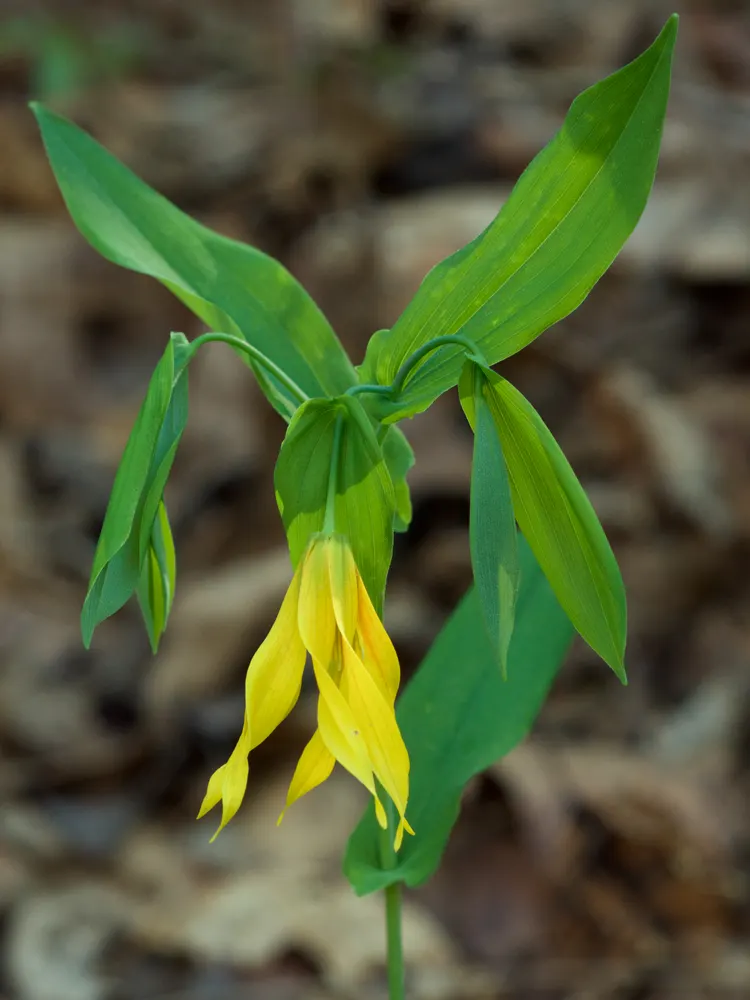
Photo: Eric Hunt, CC BY-SA 4.0 (via Wikimedia Commons)
Large-flowered Bellwort
Uvularia grandiflora
Also known as Merrybells, Big Merrybells, Large-flowered Merrybells, Strawbell
Key benefits
✦Traditional uses
✦Long before it found its way into shade gardens, large-flowered bellwort grew quietly under the closed canopy of eastern hardwood forests, where the Cherokee and other woodland peoples came to know its root well. A mild decoction of the root was traditionally taken now and then for indigestion and aching backs, while the pounded fresh root was packed onto boils, swellings, and minor sores as a drawing poultice. In lean early spring, some gatherers also cut the tender young shoots and cooked them much like asparagus, when little else was up out of the ground. Today the plant is treasured more for its quiet beauty and gentle history than for active use, a reminder that not every herb needs to be famous to be loved.
How to grow & use it
✦The full apothecary for Large-flowered Bellwort
Traditional remedies and step-by-step preparations, a complete growing guide, and how to harvest, dry, and store it, all unlocked with HerbLens Unlimited.
- ✦Remedies & preparations
- ✦ Growing guide
- ✦Harvest & storage
From under $6 a month. Free plant identifications always included.
- ✦Wild ginger
- ✦Solomon's seal
- ✦Slippery elm bark
- ✦Solomon's seal
- ✦Marshmallow root
“For the hush of an old hardwood forest in spring, held in one nodding, buttery-gold bell.”
The genus name Uvularia comes from the Latin uvula, because old herbalists, following the Doctrine of Signatures, thought the plant's dangling, tongue-like flowers resembled the human uvula and so used it for sore throats and mouth complaints.
Large-flowered bellwort is not known to be toxic, but it grows in the same woodland habitat as true hellebore (Veratrum), a genuinely toxic lookalike, so positive identification is essential before any wild harvest.