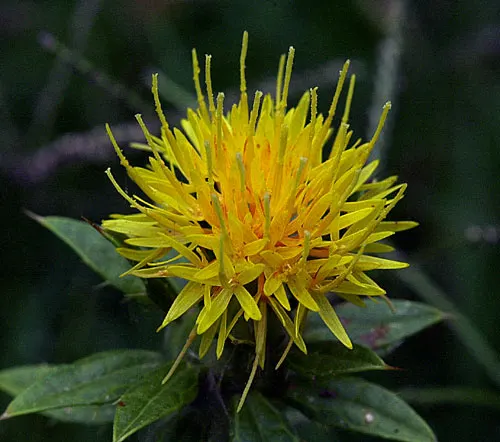
Photo: Copyrighted free use (via Wikimedia Commons)
Safflower
Carthamus tinctorius
Also known as Bastard Saffron, False Saffron, American Saffron, Dyer's Saffron, Carthamus
Key benefits
✦Traditional uses
✦Long before it was grown for its oil-rich seeds, safflower was prized for its brilliant orange-red florets, which have colored textiles, cosmetics, and food for thousands of years. Garlands of safflower were found among the treasures of Tutankhamun's tomb, and for centuries it served as a far more affordable stand-in for true saffron in kitchens across the Middle East, India, and the Mediterranean, earning it the nickname bastard saffron. In traditional Chinese medicine, the dried florets, known as hong hua, have been used for generations to invigorate the blood and ease stagnation, particularly around the menstrual cycle. Home herbalists have also steeped the petals into a warming tea, believed to support healthy circulation on cold days.
How to grow & use it
✦The full apothecary for Safflower
Traditional remedies and step-by-step preparations, a complete growing guide, and how to harvest, dry, and store it, all unlocked with HerbLens Unlimited.
- ✦Remedies & preparations
- ✦ Growing guide
- ✦Harvest & storage
From under $6 a month. Free plant identifications always included.
- ✦Hawthorn
- ✦Ginger
- ✦Chrysanthemum
- ✦Saffron (for color, not flavor)
- ✦Calendula petals
“For a little borrowed sunshine when true saffron feels too dear.”
Safflower florets were used to dye the linen wrappings and tint the cosmetics of ancient Egyptian mummies, and garlands of the flower were discovered among the burial treasures of Tutankhamun.
Safflower is safe as a cooking oil or spice in normal amounts. Concentrated extracts are different: they may encourage uterine contractions, so avoid them in pregnancy, and their blood-moving effect can add to the effect of blood thinners. People allergic to ragweed or other daisy-family plants may react to it as well.