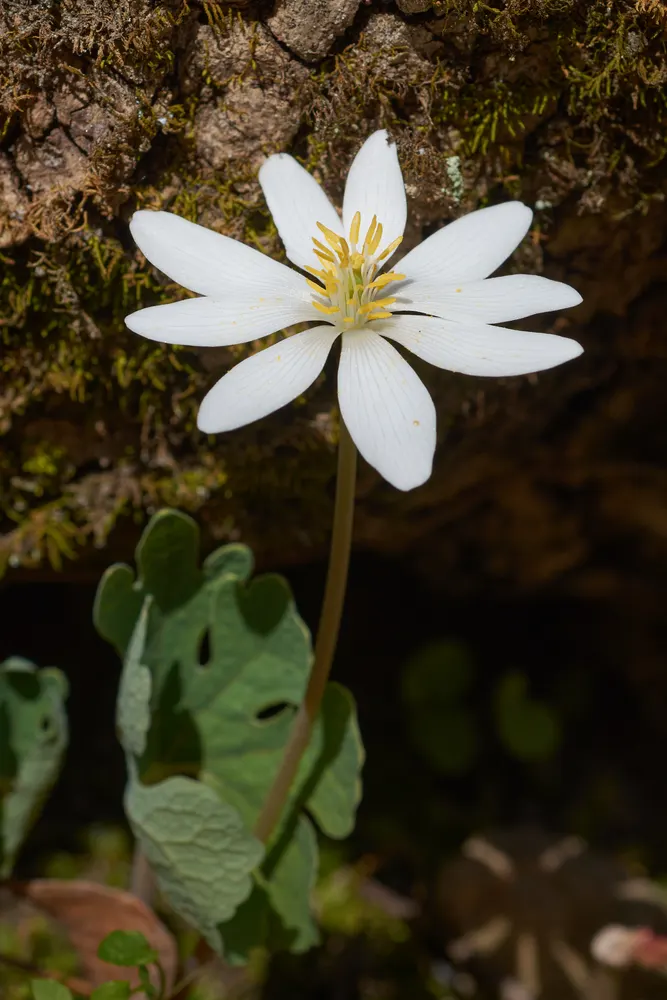
Photo: Eric Hunt, CC BY-SA 4.0 (via Wikimedia Commons)
Bloodroot
Sanguinaria canadensis
Also known as Red Puccoon, Indian Paint, Tetterwort, Sanguinaria
Key benefits
✦Traditional uses
✦Bloodroot takes its name and its story from the deep red-orange sap that wells up the moment its rhizome is cut, a color so vivid that more than a dozen Native American nations, including the Cherokee, Ojibwe, and Potawatomi, used it to dye baskets, textiles, and ceremonial objects, and to paint the skin. That same striking sap found its way into traditional remedies for skin growths, warts, and respiratory complaints long before European settlers arrived, though healers understood it as a strong and serious medicine to be handled with real caution rather than an everyday household herb. Today bloodroot is valued far more as one of the first, most beloved wildflowers of the spring woodland floor, its pure white blossoms unfurling almost overnight and then scattering their petals within days, a fleeting reminder that the forest year has turned. Because of both its toxicity and its slow-spreading, easily disturbed colonies, most people now meet bloodroot as a garden treasure and a story rather than as something to prepare and take.
How to grow & use it
✦The full apothecary for Bloodroot
Traditional remedies and step-by-step preparations, a complete growing guide, and how to harvest, dry, and store it, all unlocked with HerbLens Unlimited.
- ✦Remedies & preparations
- ✦ Growing guide
- ✦Harvest & storage
From under $6 a month. Free plant identifications always included.
- ✦Trout lily
- ✦Wild ginger
- ✦Trillium
- ✦Madder root (for red-toned natural dyeing)
- ✦Alkanet root (for red-toned natural dyeing)
“For the hush of the first warm week of spring, when a single white bloom unfurls on the leaf litter and is gone before you can visit it twice.”
The genus name Sanguinaria comes from the Latin sanguis, meaning blood, a nod to the vivid orange-red sap that bleeds from a cut rhizome, the same sap that gave the plant its use as face and body paint among several Native American nations.
Bloodroot is toxic and should not be ingested or applied to the skin at home. Its rhizome contains sanguinarine, a corrosive alkaloid that can cause nausea, vomiting, burning of the mouth and throat, and more serious illness if swallowed, and that is caustic to living tissue when applied topically. Homemade and commercial "black salve" or escharotic preparations made from bloodroot have caused severe, disfiguring skin and tissue destruction and have been the subject of repeated public health warnings when marketed as a cancer treatment; there is no reliable evidence supporting these uses, and the risks are serious and well documented. Bloodroot is not appropriate for use during pregnancy or breastfeeding, in children, or in pets, and it can interact with other medications. This entry is presented for historical, botanical, and gardening interest only. Do not attempt to prepare, ingest, or apply bloodroot in any form; if you are drawn to its traditional uses, discuss this plant with a qualified, licensed healthcare professional or a medical toxicologist rather than experimenting on your own.