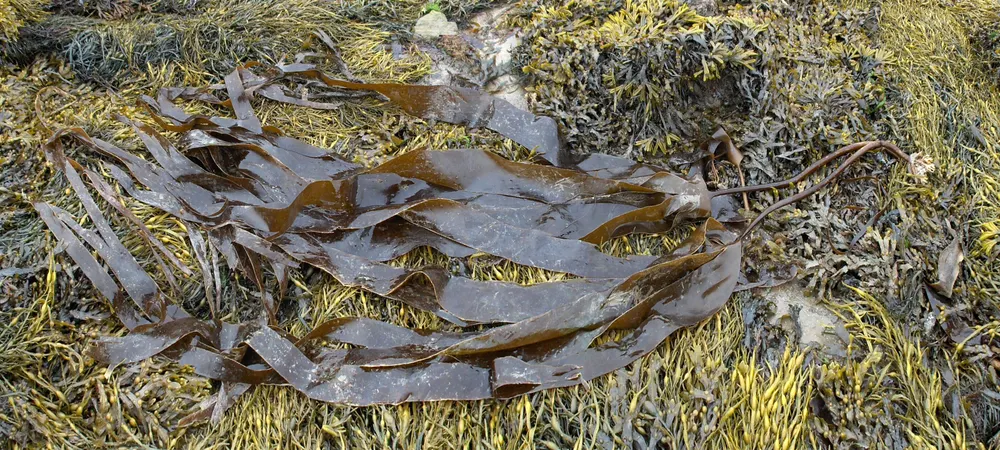
Photo: Stemonitis, CC BY 2.5 (via Wikimedia Commons)
Oarweed
Laminaria digitata
Also known as Kelp, Sea Tangle, Fingered Kelp, Horsetail Kelp, Tangle
Key benefits
✦Traditional uses
✦Along the cold, rocky coastlines of Scotland, Ireland, Brittany, and Scandinavia, oarweed has been gathered for centuries as both food and medicine, prized for the deep, savory flavor it lends to broths and the abundance of minerals it draws up from the sea. Coastal communities traditionally relied on it as a dietary source of iodine at a time when goiter, caused by iodine deficiency, was a real and visible concern inland, and eating seaweed regularly was one of the simplest ways to guard against it. Farmers, too, have long raked storm-cast kelp from the shore to feed their fields, valuing it as a mineral-rich soil amendment long before anyone spoke of trace elements or micronutrients. Its close kinship to kombu also placed it quietly at the heart of everyday cooking wherever coastal foragers turned to the sea for their pantry.
How to grow & use it
✦The full apothecary for Oarweed
Traditional remedies and step-by-step preparations, a complete growing guide, and how to harvest, dry, and store it, all unlocked with HerbLens Unlimited.
- ✦Remedies & preparations
- ✦ Growing guide
- ✦Harvest & storage
From under $6 a month. Free plant identifications always included.
- ✦Dulse
- ✦Bladderwrack
- ✦Nettle
- ✦Kombu
- ✦Bladderwrack
“When the tide pulls back and the rocks glisten olive-green in the low afternoon light, oarweed reveals itself, the sea's own quiet harvest of minerals and salt.”
The dried stipe of Laminaria digitata slowly swells as it absorbs moisture, a property coastal healers and later surgeons took note of long ago, since a dried strip of kelp placed somewhere damp could visibly expand to several times its original width overnight.
This kelp is very high in iodine, and regular heavy use can disrupt the thyroid, so it isn't suitable for anyone with a thyroid condition and should be used sparingly by others; it may also interact with thyroid medication or blood thinners. Like other seaweeds it can absorb heavy metals from the water it grows in, so only use kelp from a tested, reputable source. Pregnant and nursing women should avoid more than ordinary culinary amounts, since excess iodine can affect a developing baby's thyroid.