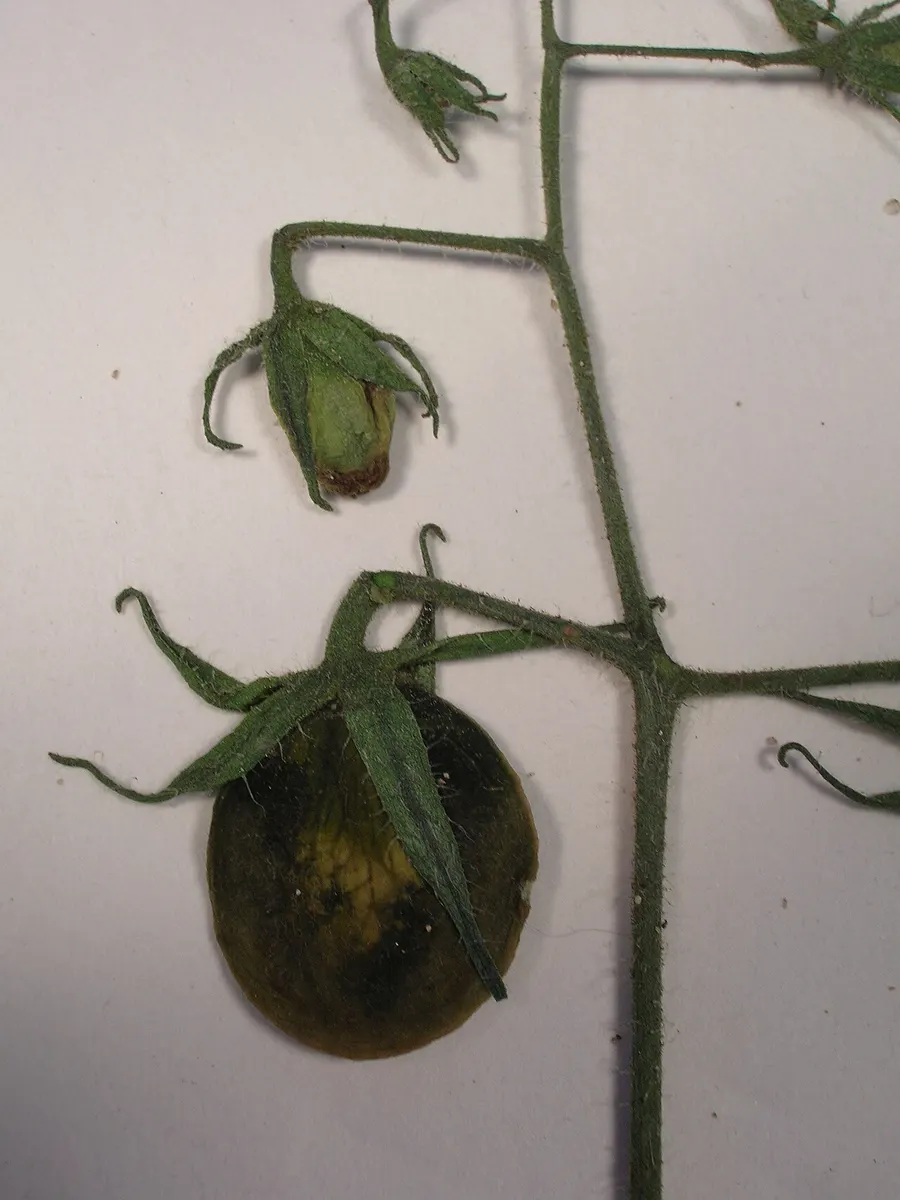
Photo: Forest & Kim Starr, CC BY 3.0 (via Wikimedia Commons)
Tomato
Solanum lycopersicum
Also known as Love Apple, Wolf Peach, Golden Apple
Key benefits
✦Traditional uses
✦Long before it reached European tables, the tomato grew wild and semi-wild across the Andes, and it was the Aztec and Maya peoples of Mesoamerica who first cultivated it in earnest, folding it into sauces and stews centuries before Spanish ships carried it home. Europeans were slow to trust it, since its kinship with deadly nightshade earned it the nickname poison apple in some regions, but by the eighteenth century it had won over kitchens from Naples to Provence and become a cornerstone of Mediterranean cooking. Beyond the table, country households traditionally pressed the ripe pulp onto sunburned or oily skin as a cooling, brightening treatment, valuing the fruit's natural acidity and juiciness. Today the tomato is prized both as an everyday staple and, through its concentration of lycopene, as one of the most studied fruits in food science.
How to grow & use it
✦The full apothecary for Tomato
Traditional remedies and step-by-step preparations, a complete growing guide, and how to harvest, dry, and store it, all unlocked with HerbLens Unlimited.
- ✦Remedies & preparations
- ✦ Growing guide
- ✦Harvest & storage
From under $6 a month. Free plant identifications always included.
- ✦Basil
- ✦Garlic
- ✦Oregano
- ✦Roasted red bell pepper
- ✦Sun-dried tomato paste
“When you want sun-warmed sweetness that turns a simple meal into a small celebration of summer.”
For nearly two centuries after arriving in Europe, the tomato was widely feared as poisonous, largely because wealthy diners ate it off pewter plates whose lead content leached into the fruit's natural acid, causing illness that got blamed on the tomato itself rather than the tableware.
The ripe fruit is a safe, common food, but the leaves, stems, and unripe green fruit contain solanine and tomatine and should never be eaten. Some people with nightshade sensitivities also choose to limit tomato.