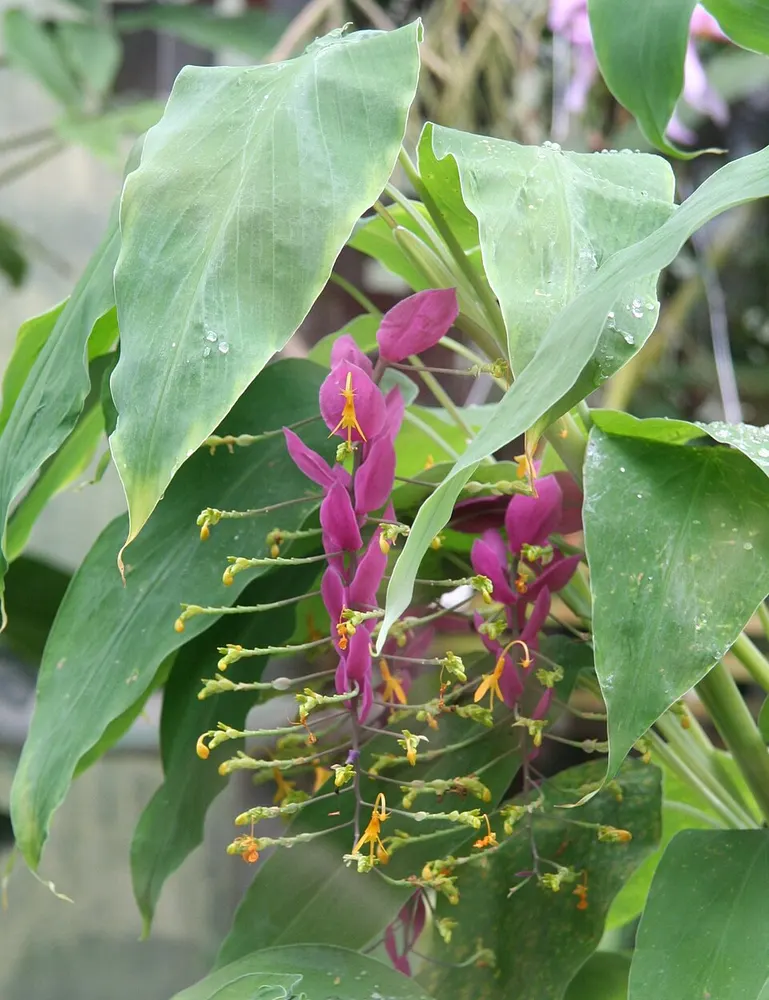
Photo: Michael Wolf, CC BY-SA 3.0 (via Wikimedia Commons)
Dancing Ladies Ginger
Globba winitii
Also known as Purple Dancing Ladies, White Dragon Ginger, Winit's Globba, Thai Dancing Girl Ginger
Key benefits
✦Traditional uses
✦Globba winitii has never really been an herb of the medicine chest, it is a plant of the garden bed and the flower vase. In its native Thailand it has long been grown around homes and temple grounds for the sheer theater of its blooms, cut and gathered for altar offerings and festival decoration much the way other cultures reach for gladiolus or orchids. Its arching stems of shrimp-pink bracts, from which small golden flowers spill and sway, earned it the affectionate name dancing ladies among growers who saw little skirted figures twirling in the wind. It remains, above all, a plant grown to be looked at and shared rather than steeped or eaten.
How to grow & use it
✦The full apothecary for Dancing Ladies Ginger
Traditional remedies and step-by-step preparations, a complete growing guide, and how to harvest, dry, and store it, all unlocked with HerbLens Unlimited.
- ✦Remedies & preparations
- ✦ Growing guide
- ✦Harvest & storage
From under $6 a month. Free plant identifications always included.
- ✦Ferns
- ✦Hostas
- ✦Torch ginger (Etlingera elatior)
- ✦Globba schomburgkii
- ✦Ornamental Curcuma varieties
“When you want a shaded corner of the garden to look like it is dancing.”
The plant is named for Luang Winit Wanandon, a Thai forestry official who helped collect and document it in the early twentieth century, and what looks like a single long-lasting flower is mostly an illusion, the showy pink and purple parts are bracts, modified leaves that persist for weeks, while the true flowers are the small yellow blossoms that emerge briefly and seem to dance free of them.
Dancing ladies ginger is an ornamental with no history as food or medicine, and its sap may mildly irritate sensitive skin; keep pets and children from chewing the leaves or rhizomes.