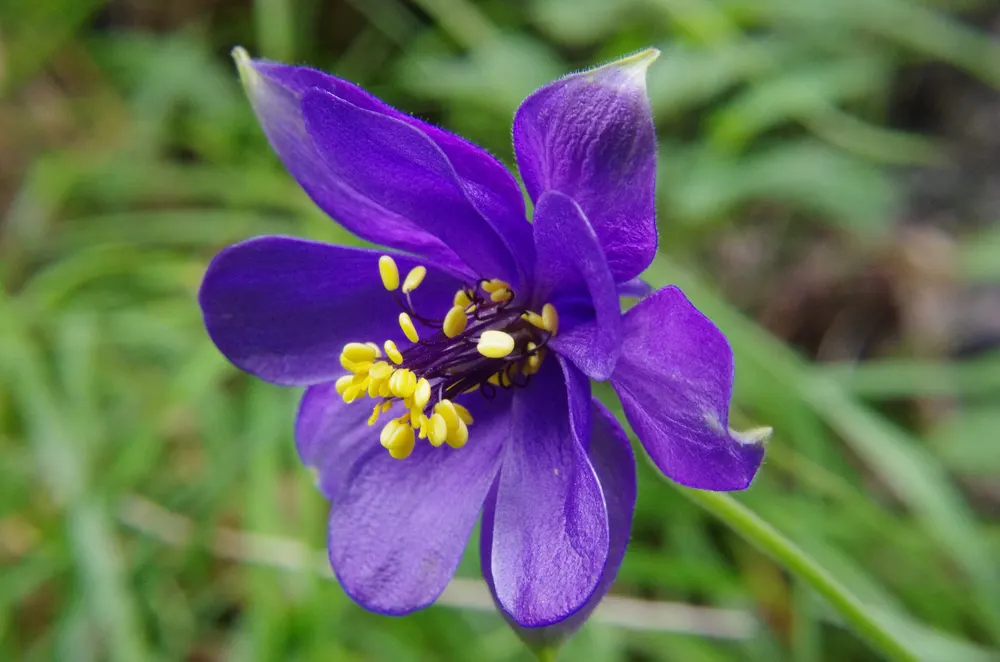
Photo: Paolo Villa, CC BY-SA 4.0 (via Wikimedia Commons)
Alpine Columbine
Aquilegia alpina
Also known as Alpine Columbine, Mountain Columbine, Alpenglockchen (regional)
Key benefits
✦Traditional uses
✦Long before it reached lowland gardens, alpine columbine bloomed only above the treeline, in the thin cold air of the Alps, where its deep blue, nodding flowers became a small emblem of the high country. European gardeners prized it from at least the seventeenth century onward as one of the showiest plants they could coax out of an alpine trough, and it traveled into cottage gardens as a symbol of both delicacy and hidden strength, since so little else could survive where it grows wild. The genus name Aquilegia is thought to come from the Latin for eagle, a nod to the curved, talon-like spurs behind each bloom, while the older folk name columbine points to its resemblance to a ring of doves in flight. Unlike many of its herbal garden neighbors, alpine columbine was valued almost entirely for its beauty and its place in the mountain landscape rather than as a remedy, and that distinction still matters today.
How to grow & use it
✦The full apothecary for Alpine Columbine
Traditional remedies and step-by-step preparations, a complete growing guide, and how to harvest, dry, and store it, all unlocked with HerbLens Unlimited.
- ✦Remedies & preparations
- ✦ Growing guide
- ✦Harvest & storage
From under $6 a month. Free plant identifications always included.
- ✦Alpine aster
- ✦Saxifrage
- ✦Gentian
- ✦Aquilegia vulgaris (European columbine)
- ✦Aquilegia canadensis (wild columbine)
“For the coldest, rockiest corner of the garden, where something improbably delicate needs to look at home among stone.”
Alpine columbine grows so close to the snowline that in some parts of the Alps it is a protected wildflower, and pickers are asked to leave it rooted in place so the short mountain summer can finish its bloom.
Alpine columbine contains cyanogenic compounds, mainly in the seeds and roots, and eating these can cause nausea, cardiac irritation, or other poisoning symptoms. Treat it as ornamental only, keep seed heads away from children and pets, and contact poison control right away if ingestion is suspected.