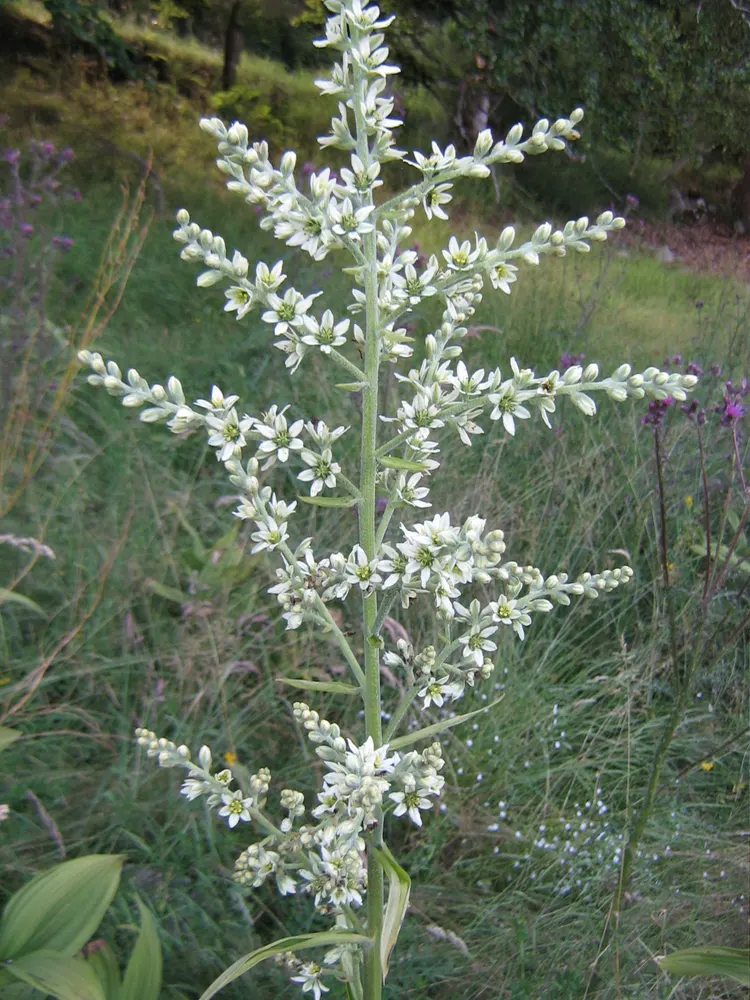
Photo: Planchon, CC BY-SA 3.0 (via Wikimedia Commons)
White Hellebore
Veratrum album
Also known as European White Hellebore, White Veratrum, Lobelia of the Alps (folk name), Duivelsbeet
Traditional uses
✦White hellebore has a long and sobering history in European folk medicine, where its powdered root was once used externally and in minute, carefully measured doses as a treatment for lice, skin parasites, and gout, and as a violent purgative in old veterinary practice. Apothecaries of earlier centuries handled it with real dread, since the line between a working dose and a fatal one was vanishingly thin. Today it survives mostly as a cautionary chapter in herbal history and as a source of pharmaceutical alkaloids studied for their effects on blood pressure, rather than as a plant anyone forages for the tea kettle. Its story is really a reminder of how differently our forebears related to dangerous plants, out of necessity, and how much modern herbalism has moved away from that edge.
How to grow & use it
✦The full apothecary for White Hellebore
Traditional remedies and step-by-step preparations, a complete growing guide, and how to harvest, dry, and store it, all unlocked with HerbLens Unlimited.
- ✦Remedies & preparations
- ✦ Growing guide
- ✦Harvest & storage
From under $6 a month. Free plant identifications always included.
“A plant to admire from a respectful distance, its story belongs on the page, not in the cup.”
White hellebore root was ground into the notorious medieval insecticide and rodent poison known as 'hellebore powder,' and foragers in the Alps have died after mistaking its broad, ribbed young leaves for gentian, which is harvested for a beloved traditional bitter liqueur.
Veratrum album is one of the most toxic plants in the European flora. Every part, especially the root and rhizome, contains potent steroidal alkaloids (including protoveratrine and jervine) that can cause severe vomiting, dangerously low blood pressure, slowed or irregular heartbeat, seizures, and death within hours of ingestion, even in small amounts. There is no safe home dose, no traditional preparation given here, and no known antidote beyond emergency medical care. It is not used in contemporary herbalism, is unsafe in pregnancy and at every other time, and poses a serious risk of misidentification with edible plants like gentian. If you or anyone has ingested any part of this plant, treat it as a medical emergency and contact poison control or emergency services immediately. This entry is offered for botanical and historical interest only; always consult a qualified medical professional or toxicologist rather than relying on plant identification alone.