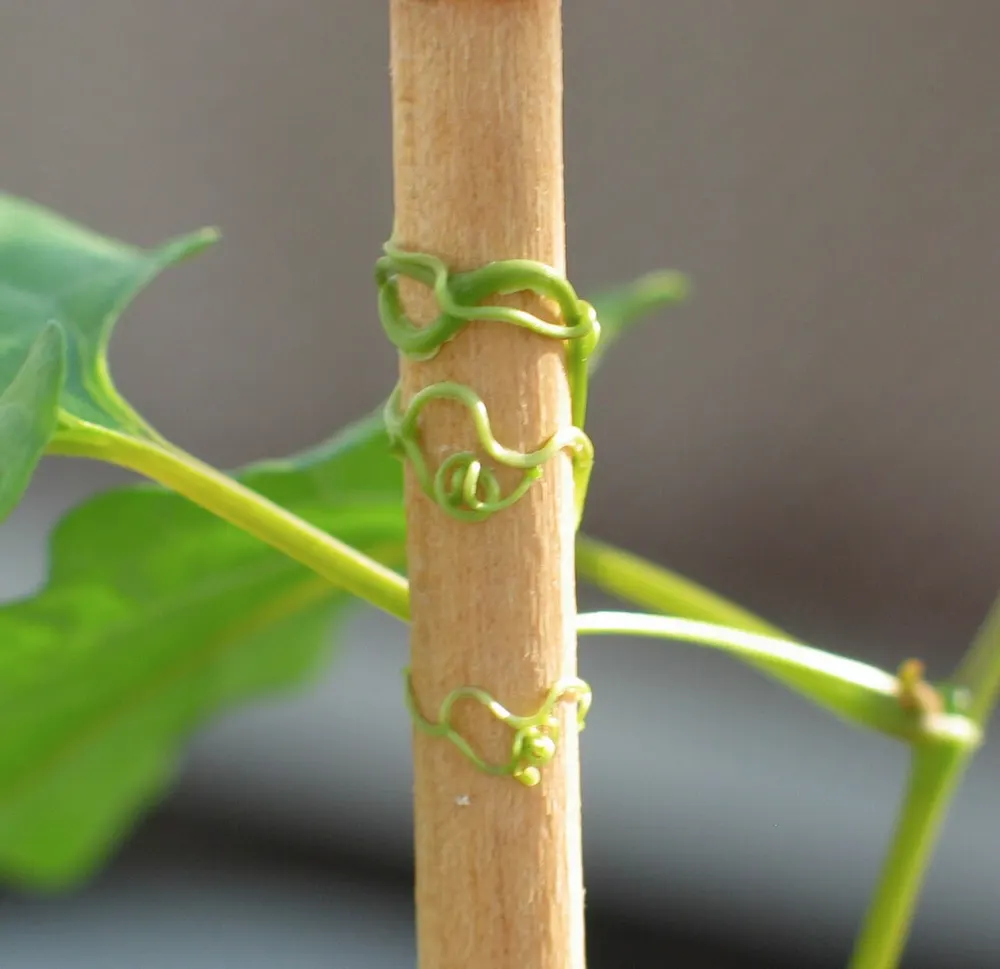
Photo: Christopher Meloche, USDA ARS, Public domain (via Wikimedia Commons)
Ovate Yam Vine
Rajania ovata
Also known as Ovate-leaved Rajania
Key benefits
✦Traditional uses
✦Rajania ovata belongs to a small, little-studied genus of climbing vines found only in the West Indies, and it has never built up the kind of kitchen or medicine-cabinet history that its famous yam cousins have. Unlike cultivated Dioscorea yams, which fed and healed communities across the tropics for centuries, this particular species seems to have stayed a quiet resident of the forest understory, admired more by botanists cataloguing Caribbean flora than by healers or cooks. That absence of a folk record is worth respecting rather than filling in with guesswork. For now, it is best regarded as a botanical curiosity, a small thread in the much larger tapestry of the yam family, rather than a proven herbal remedy.
How to grow & use it
✦The full apothecary for Ovate Yam Vine
Traditional remedies and step-by-step preparations, a complete growing guide, and how to harvest, dry, and store it, all unlocked with HerbLens Unlimited.
- ✦Remedies & preparations
- ✦ Growing guide
- ✦Harvest & storage
From under $6 a month. Free plant identifications always included.
- ✦Native passionflower vines
- ✦Bromeliads
- ✦Woodland ferns
- ✦None established, as Rajania ovata has no recorded medicinal or culinary use to substitute for
“For the quiet corners of a collection where a plant is loved simply for being itself, not for what it can do.”
The genus Rajania was named by Linnaeus in honor of the seventeenth-century English naturalist John Ray, one of the first scholars to attempt a systematic classification of plants, long before the age of modern botany.
Rajania ovata has no established food or medicinal use and has not been studied for safety. Like other wild yams, raw tubers can contain compounds that are toxic or irritating without proper processing, so it should not be eaten or used as a home remedy.