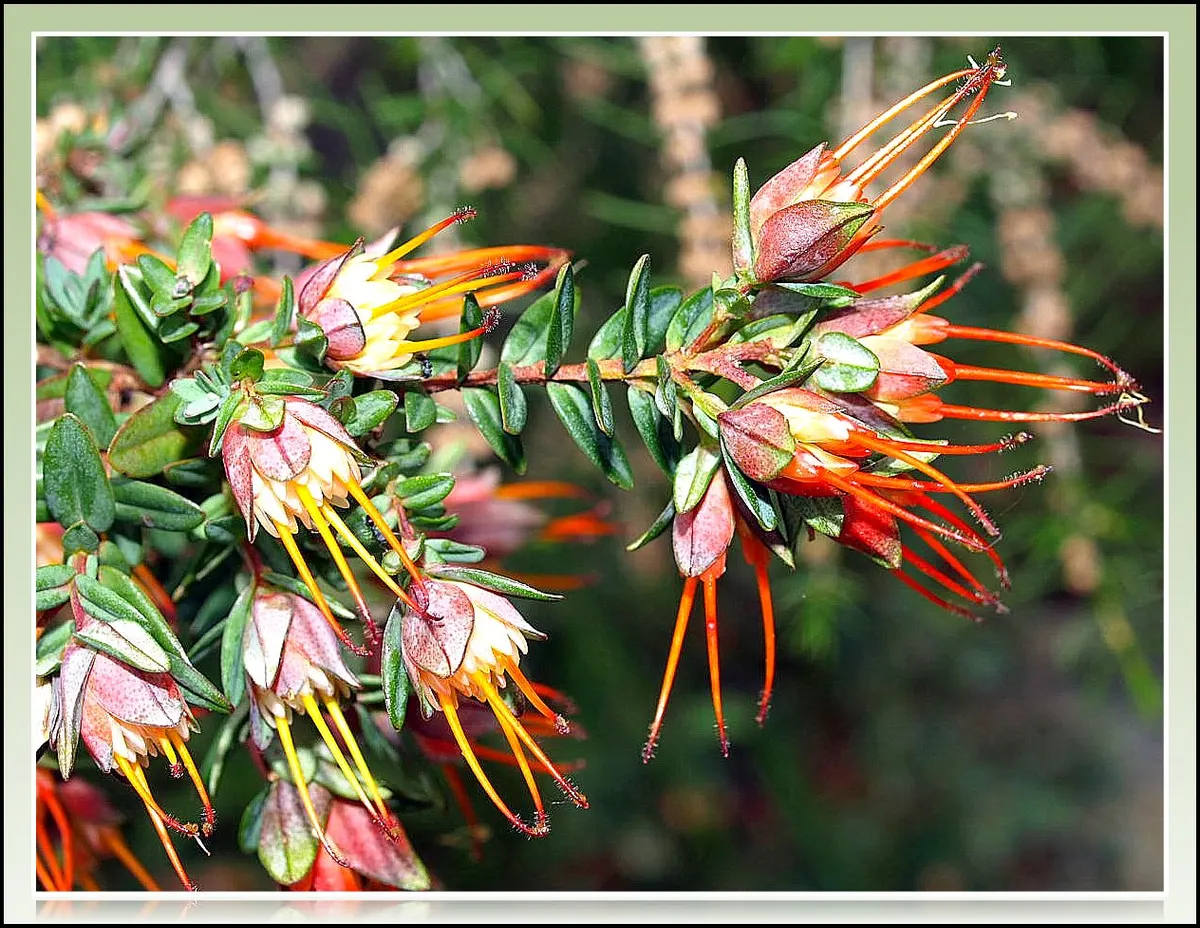
Photo: Joy, CC BY 2.0 (via Wikimedia Commons)
Lemon-Scented Darwinia
Darwinia citriodora
Also known as Lemon-Scented Myrtle, Lemon Darwinia
Key benefits
✦Traditional uses
✦Lemon-scented darwinia is a plant valued for delight rather than dosage. Endemic to the coastal heaths between the Swan River and Cape Riche in Western Australia, it earned its place in gardens for one simple reason, its narrow leaves release a bright, true lemon fragrance the moment they are brushed or crushed. Australian native plant growers have long tucked it near paths and doorways so passersby catch that scent, and its long, colorful flowering season made it a favorite for attracting honeyeaters and other nectar-feeding birds to the garden. It does not carry a documented history as a medicinal or culinary herb the way its cousin lemon myrtle does, so its story belongs mostly to the garden and the vase rather than the kitchen or medicine chest.
How to grow & use it
✦The full apothecary for Lemon-Scented Darwinia
Traditional remedies and step-by-step preparations, a complete growing guide, and how to harvest, dry, and store it, all unlocked with HerbLens Unlimited.
- ✦Remedies & preparations
- ✦ Growing guide
- ✦Harvest & storage
From under $6 a month. Free plant identifications always included.
- ✦Kangaroo paw
- ✦Grevillea
- ✦Coastal rosemary
- ✦Lemon myrtle (Backhousia citriodora)
- ✦Lemon-scented tea tree (Leptospermum petersonii)
“For the garden corner that should smell like a lemon grove every time someone brushes past it.”
The genus Darwinia was named in 1816, decades before Charles Darwin published On the Origin of Species, in honor of his grandfather Erasmus Darwin, a physician, naturalist, and early evolutionary thinker in his own right.
Lemon-Scented Darwinia is grown as an ornamental rather than eaten or brewed. Its leaves carry concentrated essential oils that can irritate the mouth, stomach, or skin if ingested, and may be harmful to pets.